You have a pocket problem.
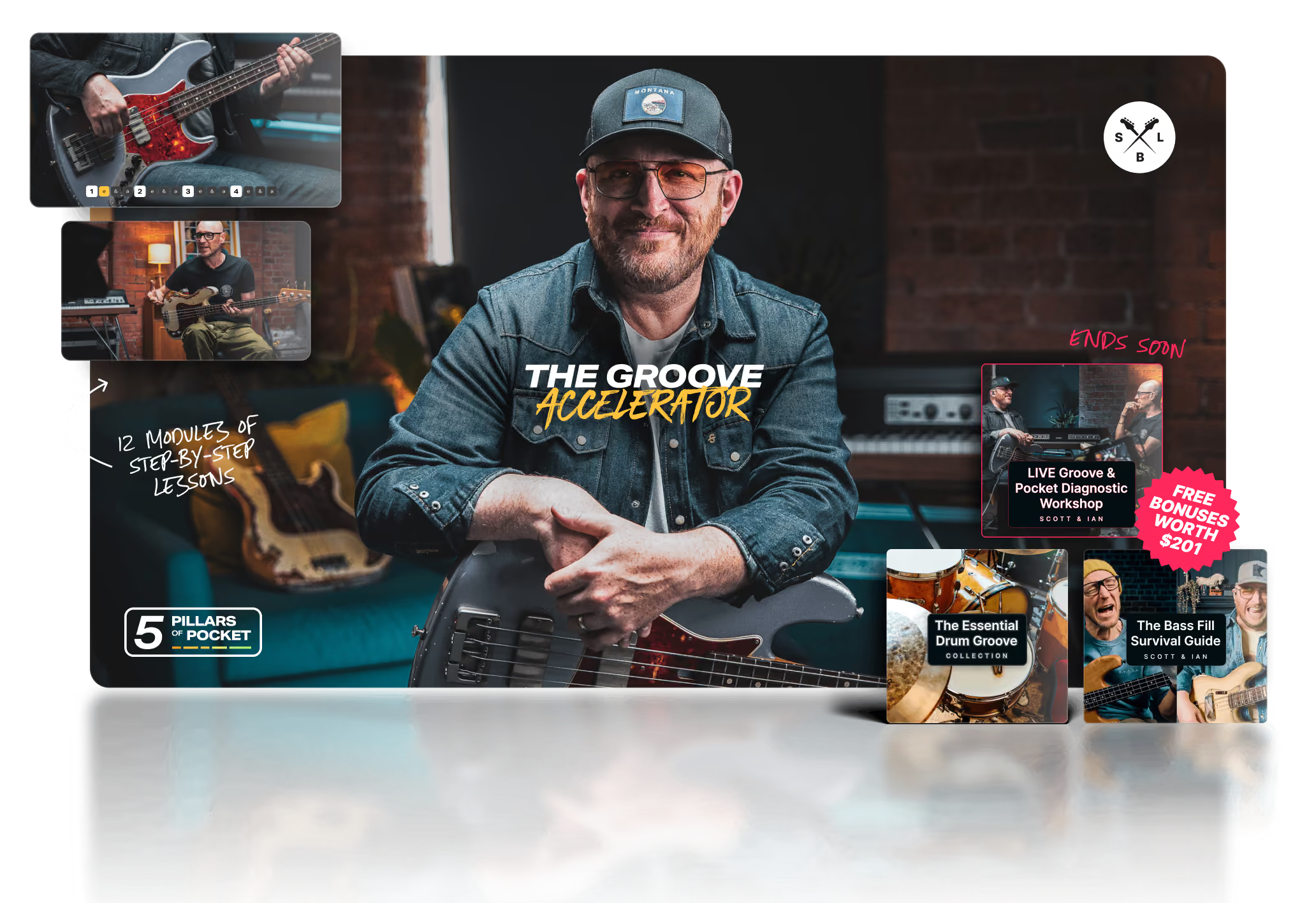
A 12-module system built on the 5 Pillars of Pocket — the exact framework that takes high beginner and intermediate bassists from stiff and hesitant to sounding unmistakably pro, no matter what level you're starting from.
See the 5 Pillars of Pocket in action

Claim your spot before enrollment closes and get your FREE bonuses
⚡ Enrollment only opens once per year — don’t miss your chance.
Scales and speed were never the thing holding you back.
Here's what nobody tells you when you start learning bass: groove and feel are treated as an afterthought. Every method, every YouTube tutorial, every "learn bass fast" course is obsessed with scales, arpeggios, and how many notes you can cram into a bar.
But ask any working bassist what actually gets them the call back for the gig — it's never "can you shred." It's "can I trust your time."

"Nothing you practice matters if you haven't got great feel and groove. You can learn every scale and arpeggio under the sun, master lines full of clever harmony — and still sound like an amateur next to a player with half your theory knowledge but twice your pocket."
Here's the wild part — most players aren't ignoring their pocket on purpose.
It's not laziness. Nobody wakes up and decides to skip working on their time feel, the way you might skip eating your vegetables out of spite. It's something much simpler than that.
Most players have no idea how underdeveloped their pocket and groove actually are. It's a blind spot — completely invisible, because nobody has ever pointed it out, measured it, or given them a way to see it.
I made this exact mistake myself, for years. I could play fast. I knew my theory inside and out. And I still didn't sound like the players I looked up to — because nobody had ever taught me that groove and feel were things you could actually train, on purpose, like any other skill.

"After you make one single sound on your bass, everyone notices your time and how your playing FEELS - even if they can’t tangibly put it into words. I cannot stress how important your grasp of rhythm, feel and ultimately groove are to your opportunities and progression as a musician."
Even once you know your pocket needs work, nobody tells you what to actually do about it.
Let's say you do realize your groove needs work.
Now what?
Do you just play along to a metronome for an hour a day? No — if that actually worked, every player with a metronome app on their phone would already sound like a pro.
Should you focus on subdivisions first? Syncopation? Ghost notes? Note placement? For how long, in what order, and how do you know when you're ready to move on? This is where most players get stuck — not because they lack discipline, but because there has never been a clear, structured path for developing pocket specifically.
"This is the only bass program ever built that tackles this problem head-on — a complete, step-by-step curriculum designed purely to take your pocket and groove to a pro level."

The Funk Accelerator
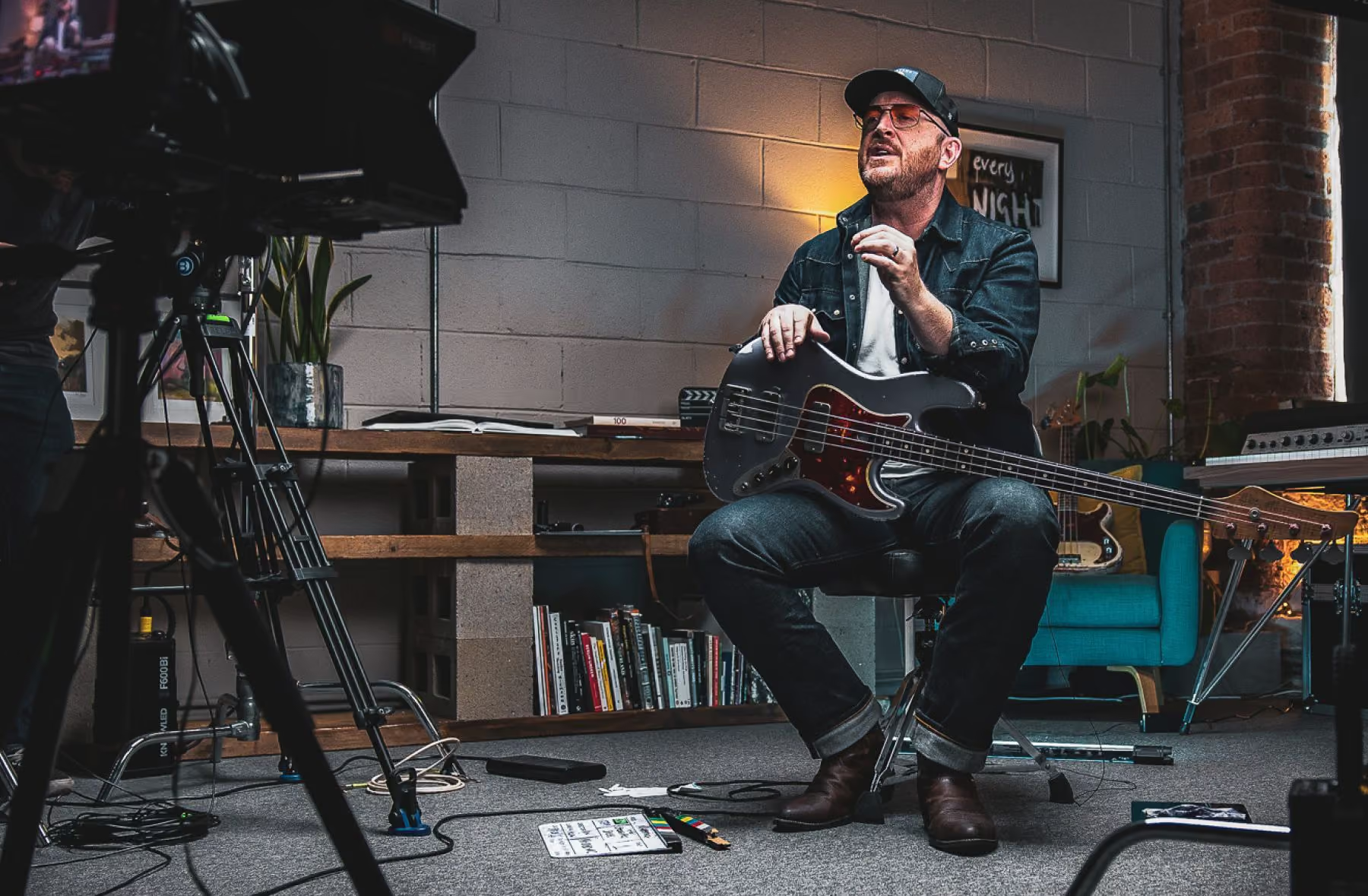
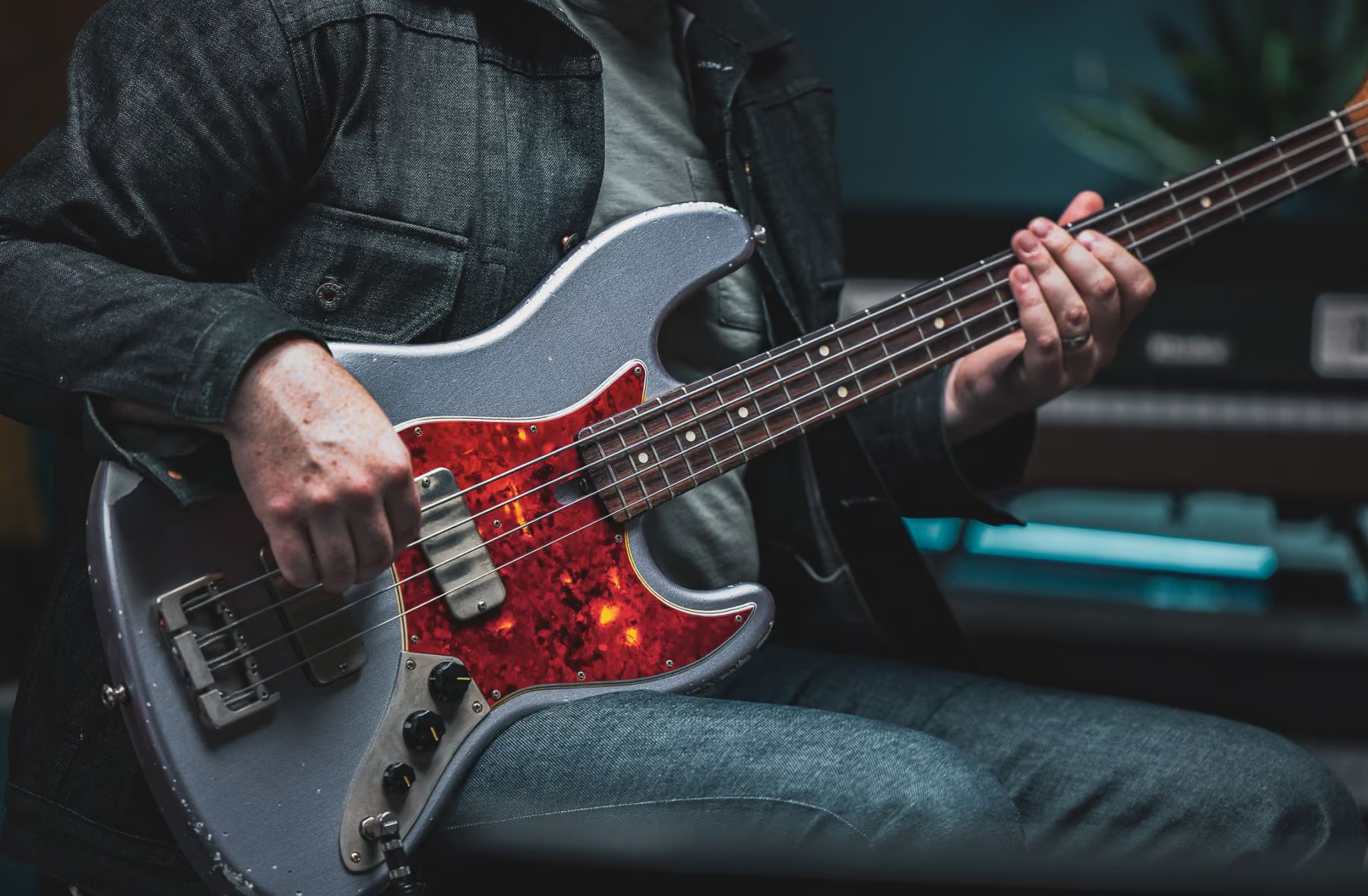

Introducing the 5 Pillars of Pocket
By the end of the Groove Accelerator, you'll be able to...



12 modules.
5 pillars.
One unmistakable upgrade to your time feel.
Internal Pulse
Start Grooving Today — Metronome Mastery
Understand pulse, pendulum, and subdivision — then master the metronome across every subdivision. You'll finish the module recording yourself playing a minor pentatonic groove using quarter, 8th, and 16th note subdivisions against the click.
Syncopation & The Grid
Syncopation Part 1 — 8th Note Mastery
Learn to feel syncopated 8th notes against the quarter note pulse, including the Sharp Shooter exercise and the short-long 8th note bounce groove. Homework: record a major pentatonic groove using straight 8ths, syncopation, and the bounce feel.
Syncopation Part 2 — 16th Note Mastery
Take everything you built with 8th notes and apply it to 16ths — the 16th note Sharp Shooter exercise, plus the classic 16th note clusters used across funk and R&B basslines. Homework: build a pentatonic groove combining 16th notes, syncopation, and clusters.
Rhythmic Modes
16 rhythmic modes broken into four focused lessons — a vocabulary for building infinite rhythmic variation from the same core subdivisions. Homework: write a two-bar bassline incorporating at least three of the rhythmic modes.
Space
Space Is the Place for Bass
Note length, rests, and the 16th note Extender exercise — how to use the silence between your notes as deliberately as the notes themselves. Homework: build a bassline that uses intentional space in at least two places.
Feel
Dynamic Articulation
Change your note envelope with fretting hand muting, ghost notes and hand drops, and explore attack style — fingers, muted thumb, slap, and pick. Homework: record the same bassline with two different attack styles.
Note Placement
Playing on, ahead of, and behind the beat — on purpose, and with control. Homework: record two basslines, one demonstrating ahead-of-the-beat placement and one behind.
The Groove of the Greats
A deep dive into the feel and vocabulary of James Jamerson, Geddy Lee, Pino Palladino, and Meshell Ndegeocello. Homework: record a bassline in the style of your favorite artist from the module.
Rhythm Section Mastery
In the Studio With a Drummer: Part 1
Playing with the kick, against the kick, note length and "the balloon," and the revolving door of leaving space vs. taking space. Homework: craft a bassline for each of four real recorded drum grooves, hitting specific pocket targets.
In the Studio With a Drummer: Part 2
- Swing vs. straight vs. wonky time feels
- Ahead / on / behind the beat, applied with a full rhythm section
- Looking at your transients in a DAW to see your time, not just hear it
- How your attack style interacts with your time feel
- Exercises built around straight, swing, and wonky grooves, plus grooves for practicing ahead/on/behind placement
Advanced Metronome Concepts
- Metronome displacement on 2 & 4 — the classic Carol Kaye approach
- Advanced metronome displacement techniques
- Disappearing bars
- Basslines built to apply every concept from the module
Wrap Up & Integration
Bring all 5 Pillars together in one final bassline creation project, built over a custom track designed for you to make the material entirely your own.
Brought to you by world-class educators
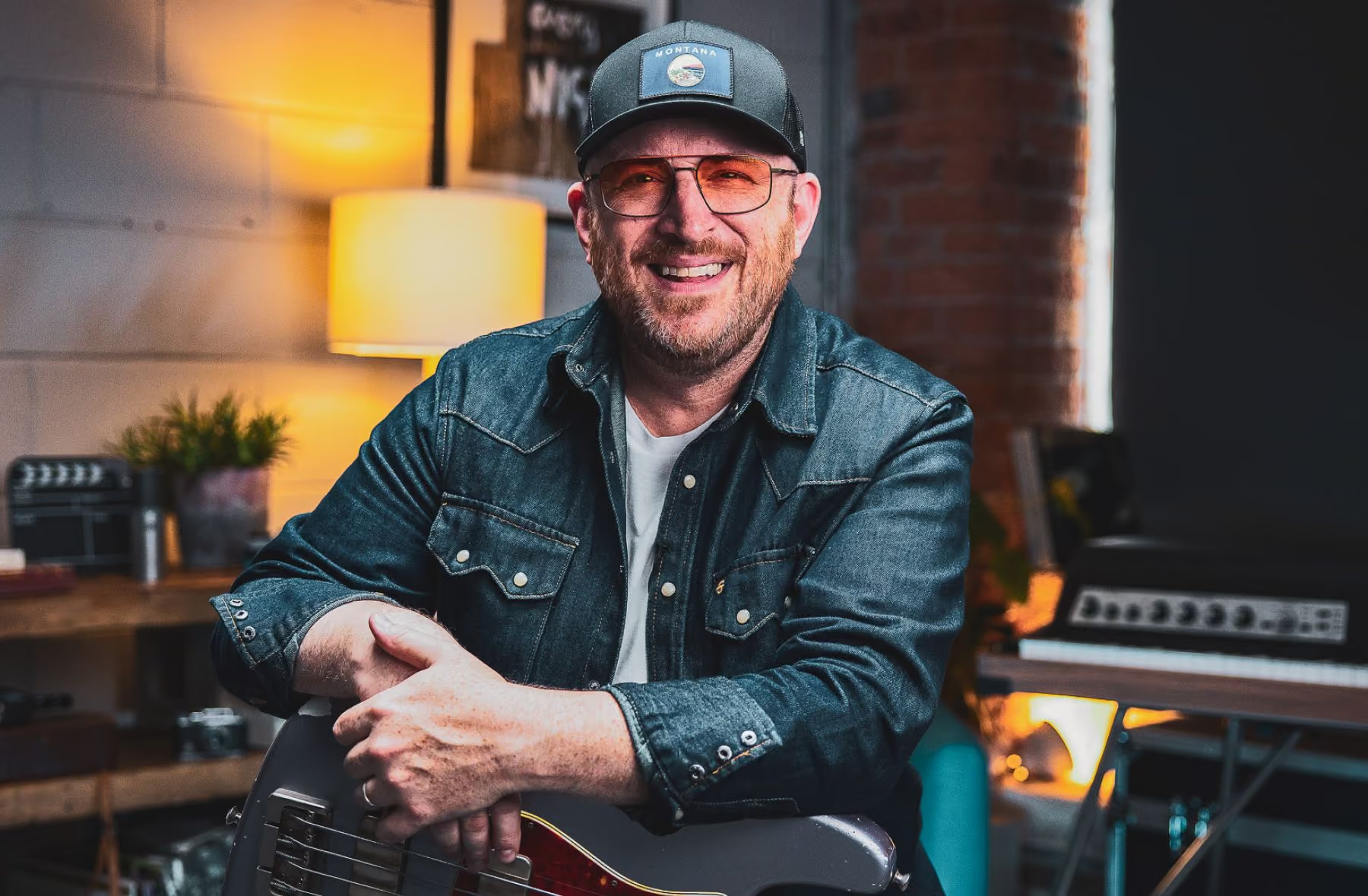
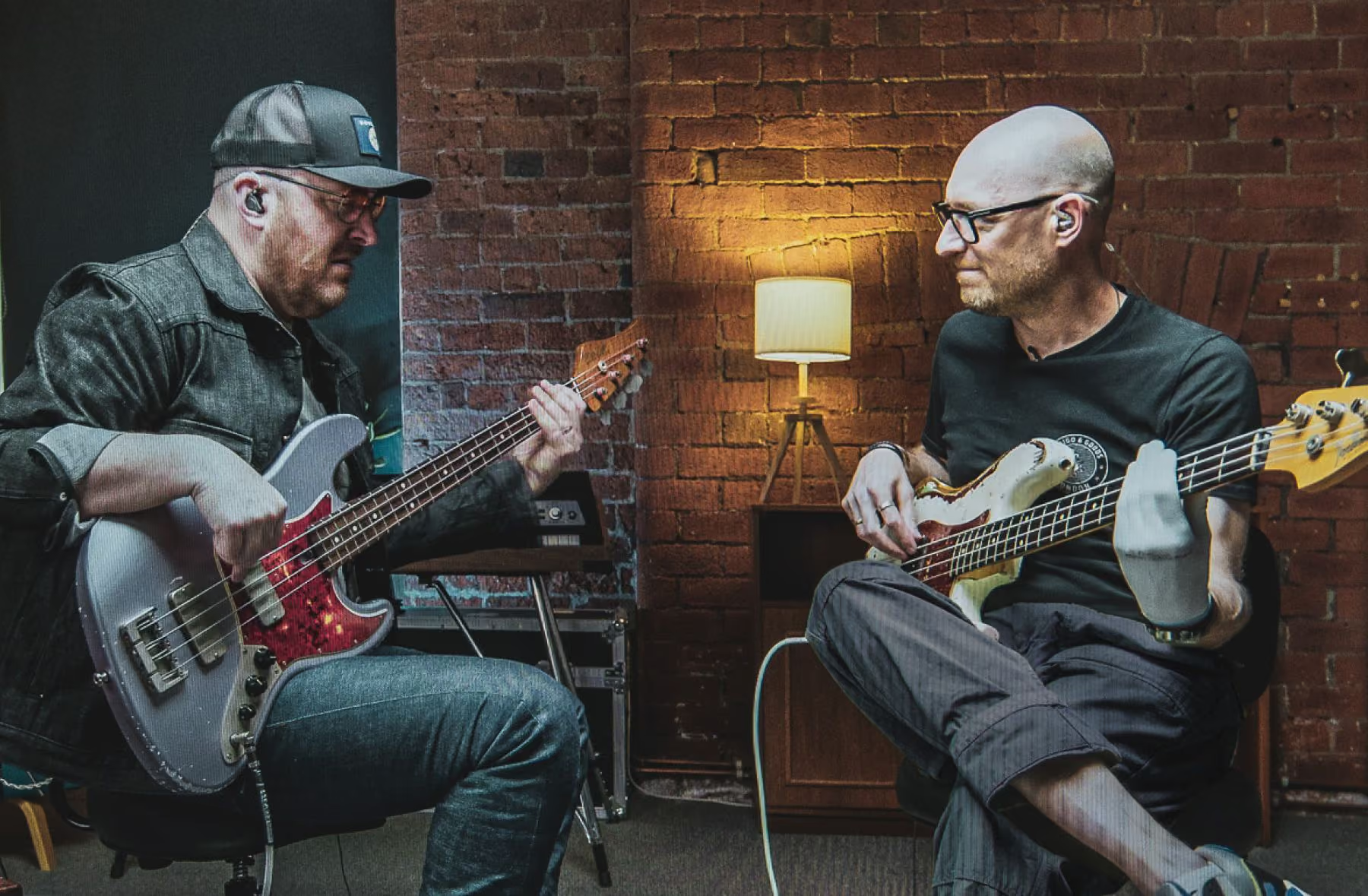
Ian Martin Allison
Ian is a world-class session musician with a huge heart for education.
A former music college professor and an outstanding instructor in his own right, he's worked with artists such as Eric Hutchinson, Cory Wong, Scary Pockets, LANY, Ondara, Gavin Degraw, John Legend, Eric Paslay, Jeremy Messersmith and Soul Asylum.
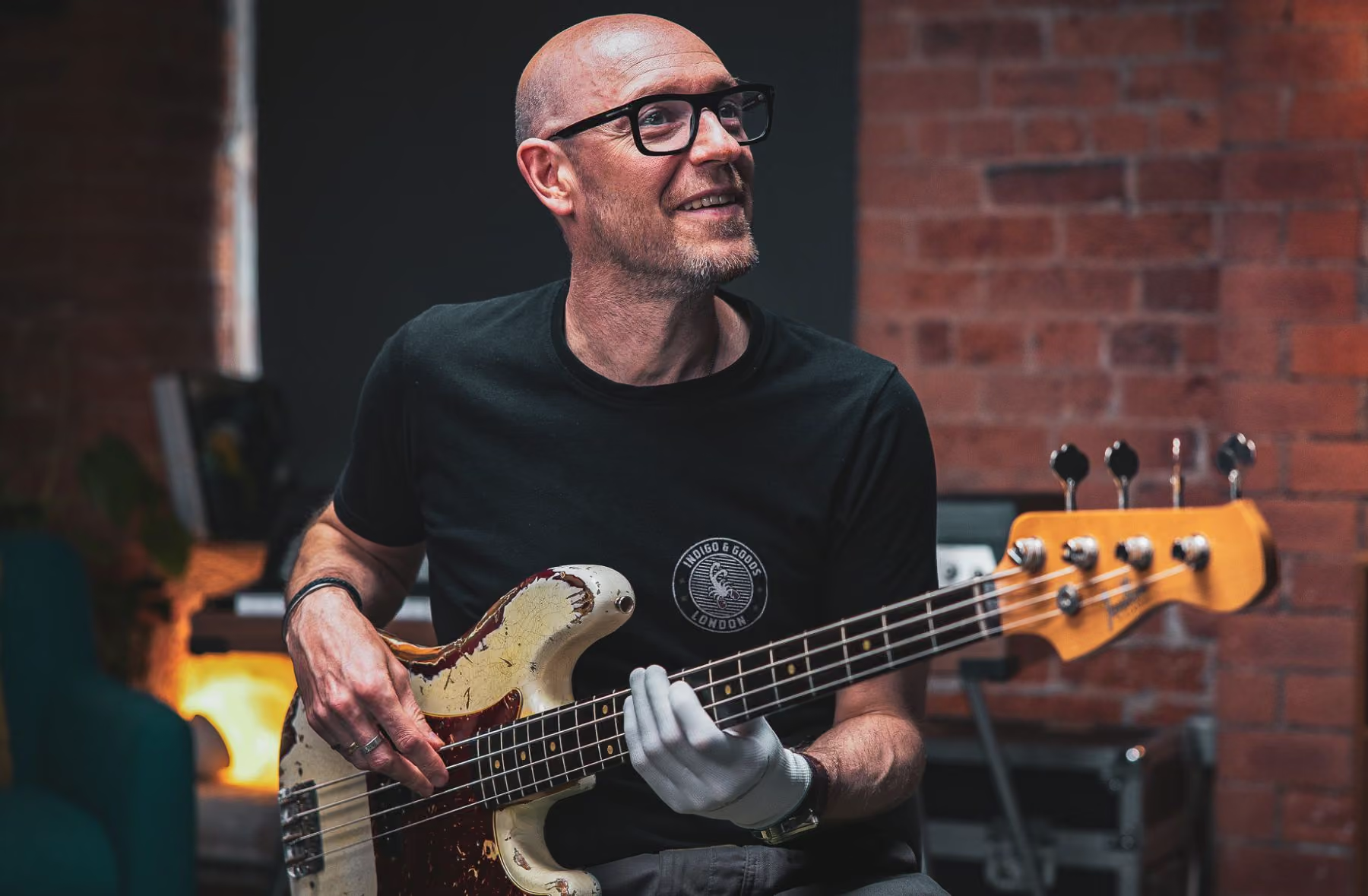
Scott Devine
Scott is the founder of Scott's Bass Lessons and has spent over 30 years playing and teaching bass. Over the past 15 years he's built SBL into one of the most-trusted bass education platforms in the world — and the 5 Pillars of Pocket is the same framework he uses to diagnose exactly where a player's time feel is breaking down, and exactly what to fix first.
This isn't theory for theory's sake. It's the practical, step-by-step system built from three decades on the bandstand — distilled into 12 modules anyone can follow.

Real players.
Real transformations.
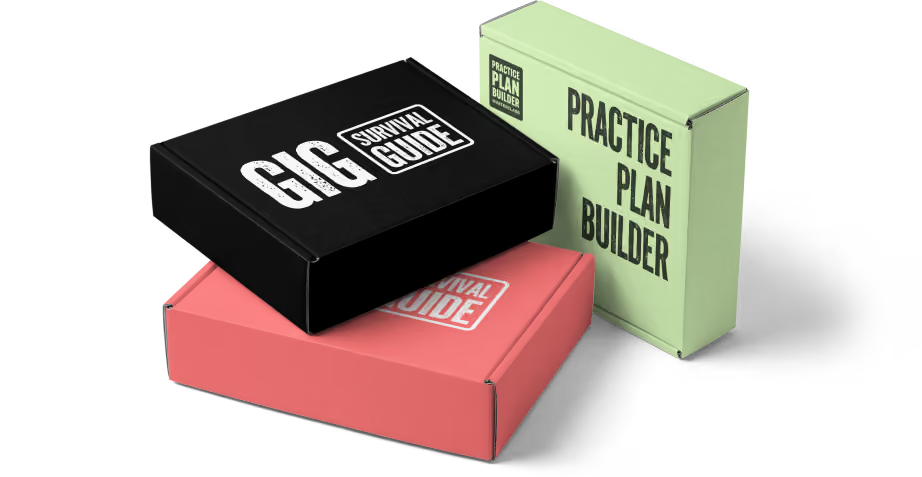
3 FREE Bonuses to Fast-track Your Pocket.
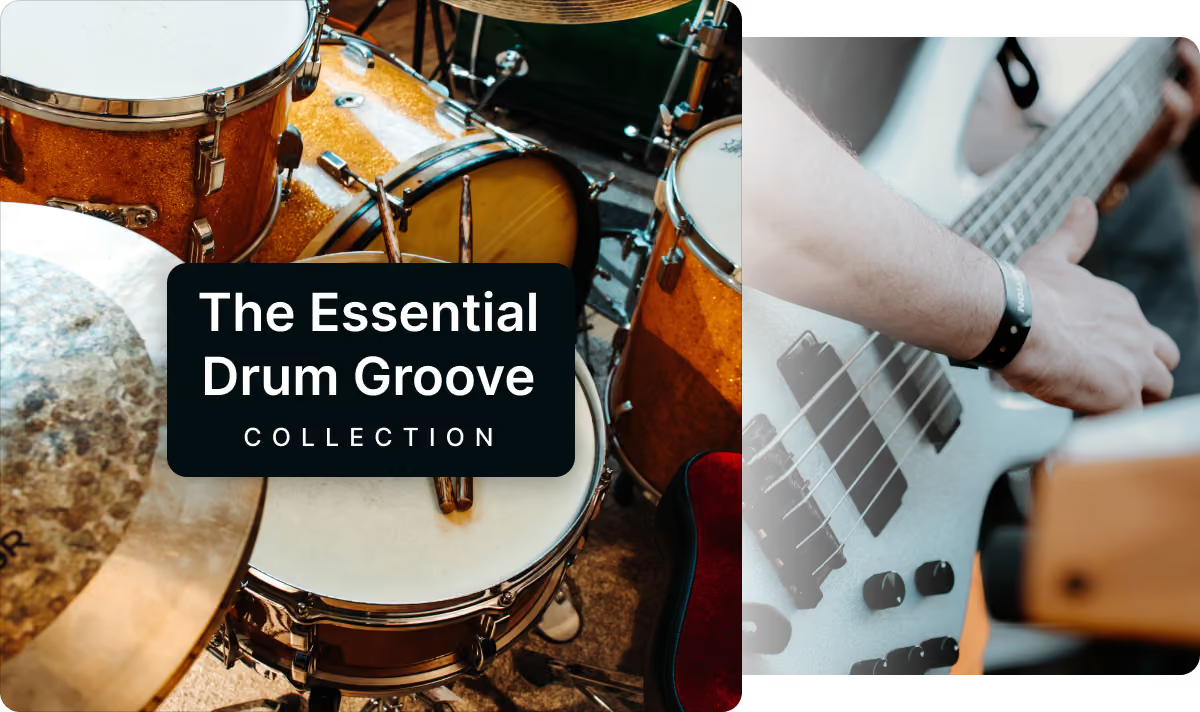
The Essential Drum Groove Collection
An essentials pack of core backbeat grooves, covering the styles and feels you'll actually use most, rock, pop, funk, Motown, shuffle, halftime swing, four-on-the-floor, and Dilla feel among them.
Built specifically to support what you're learning inside the Groove Accelerator, so you're applying the 5 Pillars against real, genre-specific drum parts, not abstract exercises.

The Bass Fill Survival Guide
Learn how to add fills tastefully without ever breaking the groove. Because great fills don't interrupt the pocket — they enhance it.
This guide shows you exactly where, when, and how much to play so your fills add excitement instead of derailing the time feel you've worked so hard to build.
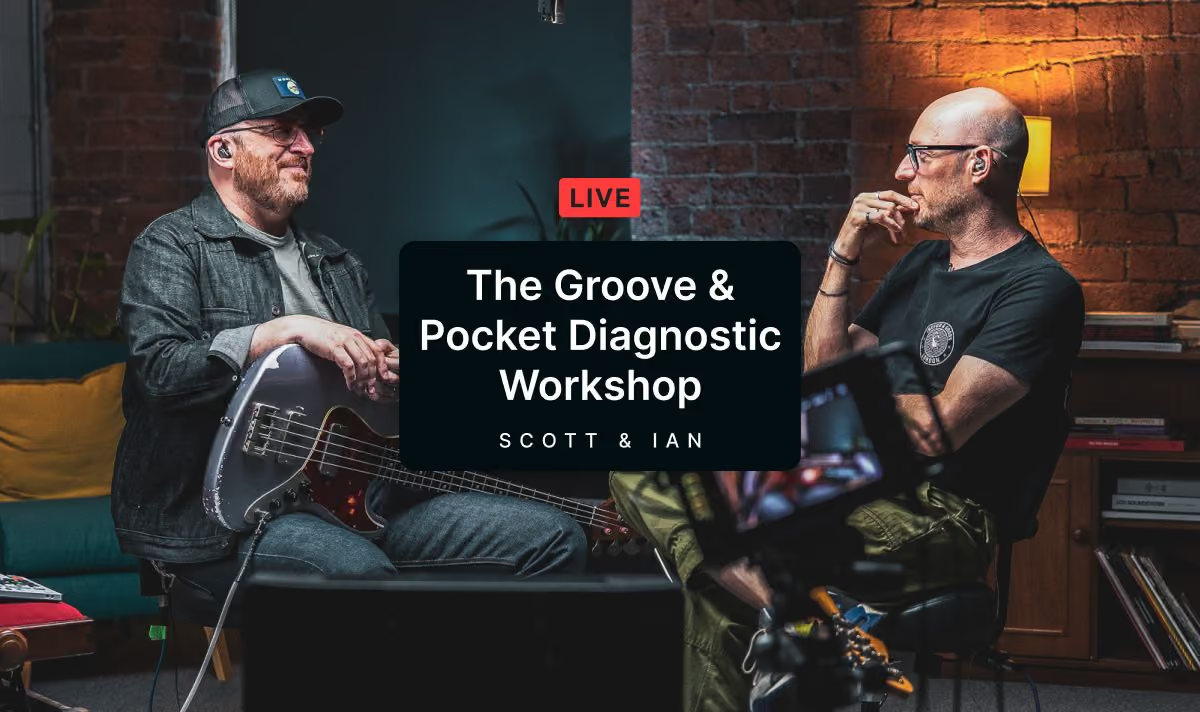
LIVE Groove & Pocket Diagnostic Workshop with Scott & Ian

A Guarantee That Actually Means Something.
Some courses make refunds complicated. Prove you finished the lessons. Only certain circumstances qualify. Make you feel bad for even asking.
That's not how this works.
Go through the programme. Do the exercises. Put the concepts into practice.
And if you genuinely don't feel your groove has improved, simply contact us within 30 days and we'll refund every penny.
No hoops. No awkward conversations. No risk.

The Full Value Stack.
3 Months Extra Weekly Coaching (38 weeks total)

Everything you need to fix your groove for good.
Before you go...
A 12-module program built around the 5 Pillars of Pocket, Internal Pulse, Syncopation, Space, Feel, and Rhythm Section Mastery. It's not a style course. It's the foundation underneath every style, built to train your time, feel, and groove as their own dedicated skill.
If you've done the Funk Accelerator, that program applies pocket and groove specifically within funk vocabulary and harmony. If you've done FSB, you've already touched on time and feel there too, but as one module among many. The Groove Accelerator takes that same territory and goes deep, the entire 12-module program, every pillar broken down into granular, dedicated work, rather than one module covering the basics before moving on. No overlap in the sense of wasted content, this is the deep version of something FSB only introduces.
Free content is built to teach individual concepts as they come up. This is a structured, sequential system, each pillar builds on the last, so you're not piecing it together from scattered videos.
High beginner through intermediate players, though the 5 Pillars framework holds up at any level. If you can already play basic bass lines, you're ready to start.
Yes. Pocket and groove aren't things technical experience automatically fixes, plenty of experienced players have strong technique and still haven't trained this specifically.
All styles. The framework itself is genre-agnostic, and Module 8 looks at how specific genre greats apply it in their own playing, but the core skills transfer everywhere.
There's no fixed weekly requirement - with the Groove Accelerator, you have unlimited access, so you're free to move through the material at whatever pace suits your schedule and life.
That said, consistency beats volume. If you can commit to just 20 focused minutes a day, you'll build steady momentum and see real progress - far more than an occasional long session. Short, regular practice keeps the material fresh in your fingers and your ear, which is what actually drives improvement.
So aim for daily focused practice where you can, but don't stress if a week gets busy. The program is built to flex around you, not the other way round.
It's self-paced, go through it at whatever speed fits your schedule, and you get lifetime access, same as every SBL Accelerator.
Not individual coach review of your homework, that's not part of the Accelerator format. You'll have comments on every lesson with moderator support for your first 4 months.
There's a comments section on every lesson where you can connect with other students working through the same material, that's the extent of it, this isn't a cohort-based program.
That depends on how consistently you work through the material, this is a skill-building program, not a shortcut. What we can tell you is the framework itself, 5 pillars, in sequence, is the same structure that works for developing pocket in any player.
That's the specific point of Pillar 5, Rhythm Section Mastery. You'll work with real drum parts, with and against the kick, so what you build here is built to hold up with a real rhythm section, not just in isolation.
This is built step by step, one pillar at a time, so you're never facing the whole thing at once. Go at your own pace, there's no schedule to fall behind on.
No, this is a standalone program, open to anyone.
No, just your bass and a way to hear a metronome or click, most phones already have a free app for that.
You're covered by the 30-day money-back guarantee, no hoops, no awkward conversations.
Stop practicing around the one thing that actually makes you sound like a pro.