LIMITED TIME

MOST BASSISTS
NEVER ESCAPE

THE SLOP LOOP
Technique Sales Video
limited time

Most bassists never escape

— They're stuck in the Slop Loop
Fretboard Sales Video
limited time

Enrollment Now Open

⏳ Your Early Enrollment Bonus disappears when the timer reaches zero
Enrollment only takes place once a year – Doors close when the timer reaches zero
[timer]
Risk-free. 30 Day 100% Money Back Guarantee
LIMITED TIME

ENROLLMENT NOW OPEN

Start building a solid technical foundation with the Technique Accelerator today.

🎁 Fast-Action Bonus available for a limited time
[timer]
Risk-free. 30 Day 100% Money Back Guarantee
The Slop Loop

Have you ever felt like your technique is holding you back?

If your playing feels messy…
If faster lines fall apart…
If everything feels tense…
If you can’t even imagine playing clean 16th-note funk grooves…
If your hands won’t do what your brain hears…

If you still sound a bit… beginner-ish
after way too long (maybe even years). 

It’s not because you’re untalented.
And it’s not because you haven’t practiced enough.

It’s because (like most bass players)
you’re stuck inside what I call:

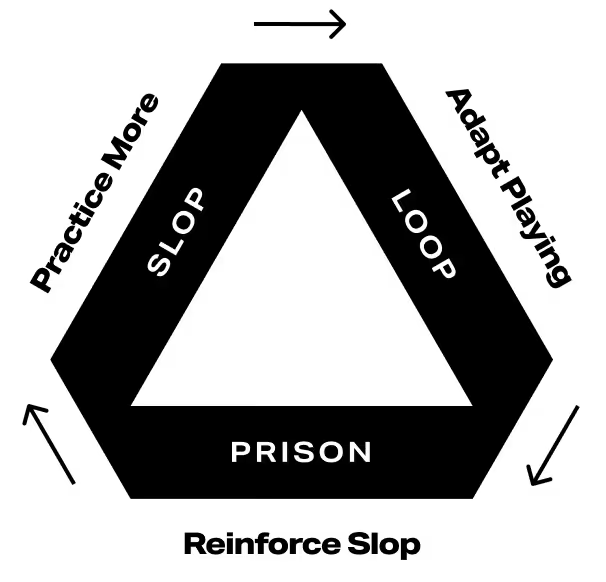
The Slop Loop Prison
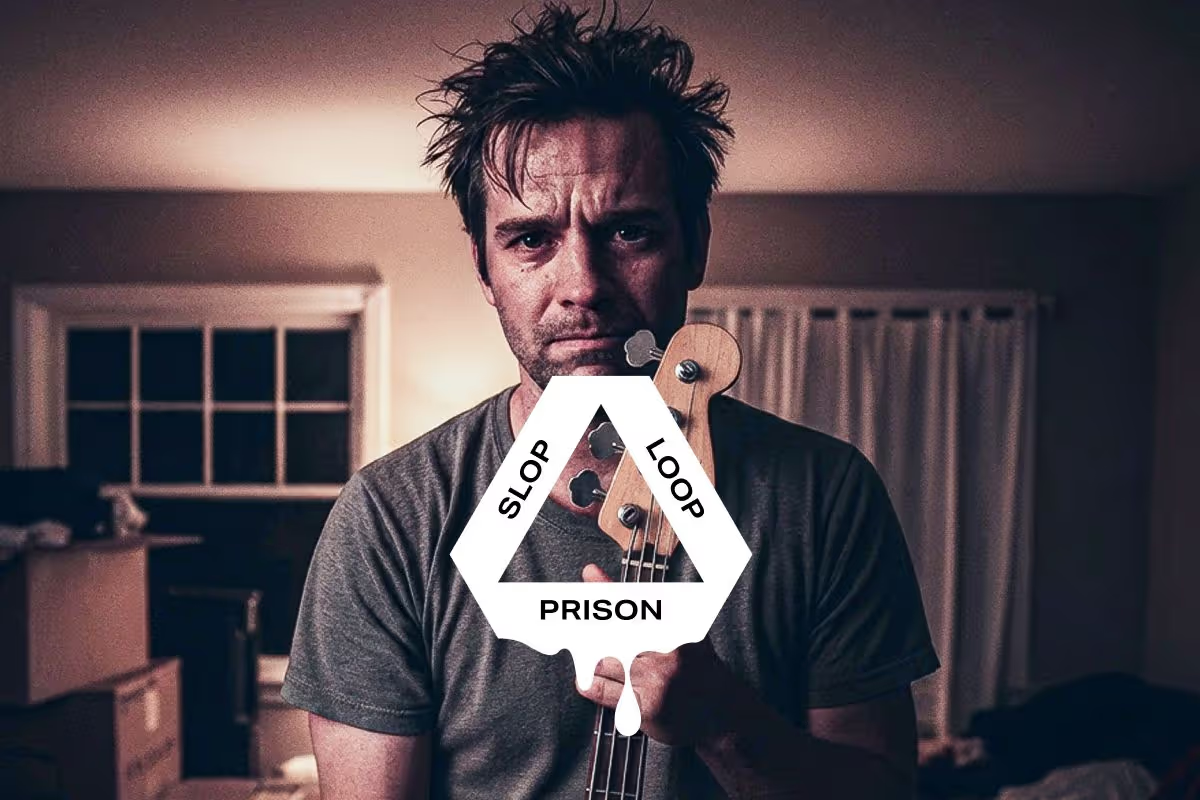
Where:

Your playing sounds sloppy
You keep doing “the right things”… but nothing ever changes
And the harder you try, the more stuck you feel

Not because you did something wrong…

…but because no one ever showed you how to build technique properly in the first place.

The Uncomfortable Truth Most Bassists Never Hear

If you’re stuck in the Slop Loop, you don’t slowly drift out of it.

You don’t “practice your way free.”
You don’t magically clean things up with time.

You stay there.

For years.
Often forever.

That’s why you see bass players who’ve been playing 5… 10… even 20+ years —
who still sound tense, messy, and inconsistent the moment things get demanding.

It’s not because they’re lazy.
It’s not because they don’t care.
And it’s definitely not because they’re “not talented enough.”

It’s because once sloppy technique sets in… everything gets glued together.

Your hands learn to compensate.
Your brain learns to work around the problems.
Your playing becomes just “good enough” to survive — but never clean enough to feel free.

So when you try to play:

Faster lines
16th-note funk grooves
Clean fills and transitions
Anything that needs control, speed, or precision

It falls apart.

Not occasionally.

Reliably. Every time. 

And here’s the part most people don’t realise:

The Slop Loop doesn’t feel like failure.

It feels like:

… “I just need to practice more.”
… “I’m probably overthinking this.”
… “Maybe I’m just not built for fast stuff.”
… “I’ll clean it up later.”

That’s why it’s a prison.

Because while you’re inside it…
nothing actually improves — it just gets disguised.

You can learn more songs.
You can learn more theory.

But the moment the music asks more of you —
your technique taps out.

And unless something fundamentally changes…

It always will.

Why “Just Practice More” Makes It Much Worse

This is where most bass players accidentally lock themselves deeper into the Slop Loop.

Because when their playing feels messy, tense, or unreliable…
they do the most logical thing in the world:

They practice more.

More licks.
More songs.
More grooves.
Higher tempos.
Longer sessions.

And on the surface, it feels productive.

But here’s the brutal truth:

General practice does NOT fix technical problems. It cements them.

Here's why:

Every time you practice with sloppy mechanics — even slightly sloppy —
you’re not “working through it.”

You’re training your motor cortex to reproduce the slop automatically.
Think about what’s actually happening:

Your plucking hand compensates instead of stabilising
Your fretting hand squeezes instead of relaxing
Muting becomes reactive instead of intentional
String crossings get clumsy
Shifts feel rushed
Tension creeps in… then stays

And instead of isolating and fixing those things…

You keep playing music around them.

That’s not progress.
That’s adaptation.

You get better at surviving with broken technique.

Which is why so many bass players can:

Play songs they already know
Groove kinda comfortably at safe tempos
Sound “fine” until things get exposed

But the moment the music asks for more?

Faster lines.
Cleaner articulation.
16th-note funk.
Tight fills.
Controlled dynamics.

Everything collapses.

And here’s the part no one tells you:

You cannot fix a specific technical fault with non-specific practice.

That’s like going to the gym and saying,

“I want a stronger body.”

…but never training the one weak muscle that’s actually limiting you.

You might get fitter.
You might get tired.
You might feel like you’ve “worked hard.”

But the weakness stays.

On bass, it’s the same.

If your issue is:

Right-hand inconsistency
Excess fretting pressure
Poor muting coordination
Inefficient shifting
Tension at speed

Then playing more music doesn’t fix it.

It teaches your hands to hide it better.

Which is why “practice more” feels responsible…
but keeps players stuck for decades.

Not because they’re doing nothing —
but because they’re doing the wrong thing, perfectly consistently.

And once those compensations are baked in?

They don’t fade with time.

They harden.

That’s how the Slop Loop Prison gets reinforced.

That’s how you get stuck in there forever.

Neuroscience

The Science Behind Why Your Playing is Broken

The problem isn’t that you haven’t practiced enough.
And it’s not that you “lack talent.”

The problem is that you were never taught how the body actually learns complex movement.

Because bass playing isn’t one skill.
It’s a stack of complex motor tasks happening at the same time.

From day one, bass players are taught to do everything at once:

Play the line
Keep time
Mute the strings
Shift positions
Control dynamics
Increase speed

All simultaneously.

And here’s what almost nobody realises…

Your brain can’t learn like that.
Specifically — your motor cortex.

This is the part of your brain responsible for learning, storing, and refining physical movement.

And it has one hard rule:

It cannot build new, efficient movement patterns when it’s overloaded.

When you ask it to fix five things at once…
it doesn’t improve them.

It locks in whatever pattern already exists.

Even if that pattern is sloppy.
Even if it’s tense.
Even if it’s inefficient.


So instead of improving, something else happens.

The motor cortex gets overloaded, and compensates.
It does the only thing it can do under pressure:
It reuses old programs
It takes shortcuts
It trades efficiency for survival
It builds tension-based solutions

Not because they’re good…

…but because they work well enough to get through the line.

And this is where players get stuck forever.

Broken technique gets bundled.
Plucking problems hide inside fretting problems.
Muting problems hide inside groove.
Tension hides inside “trying harder.”

Everything gets glued together.

So nothing can ever be fixed individually.

This is the real reason most bass players never escape what I call
The Slop Loop Prison.

They’re not failing to improve.

They’re unknowingly overwhelming the very system that needs simplicity in order to change.

And after long enough, something scary happens…

Sloppy starts to feel “normal.”
Tension feels “necessary.”
Inconsistency feels like “just how bass is.”

Until one day you realise:
You’ve been playing for years……and you still sound sloppy.

The Breakthrough Realisation

(The Moment Everything Flips)

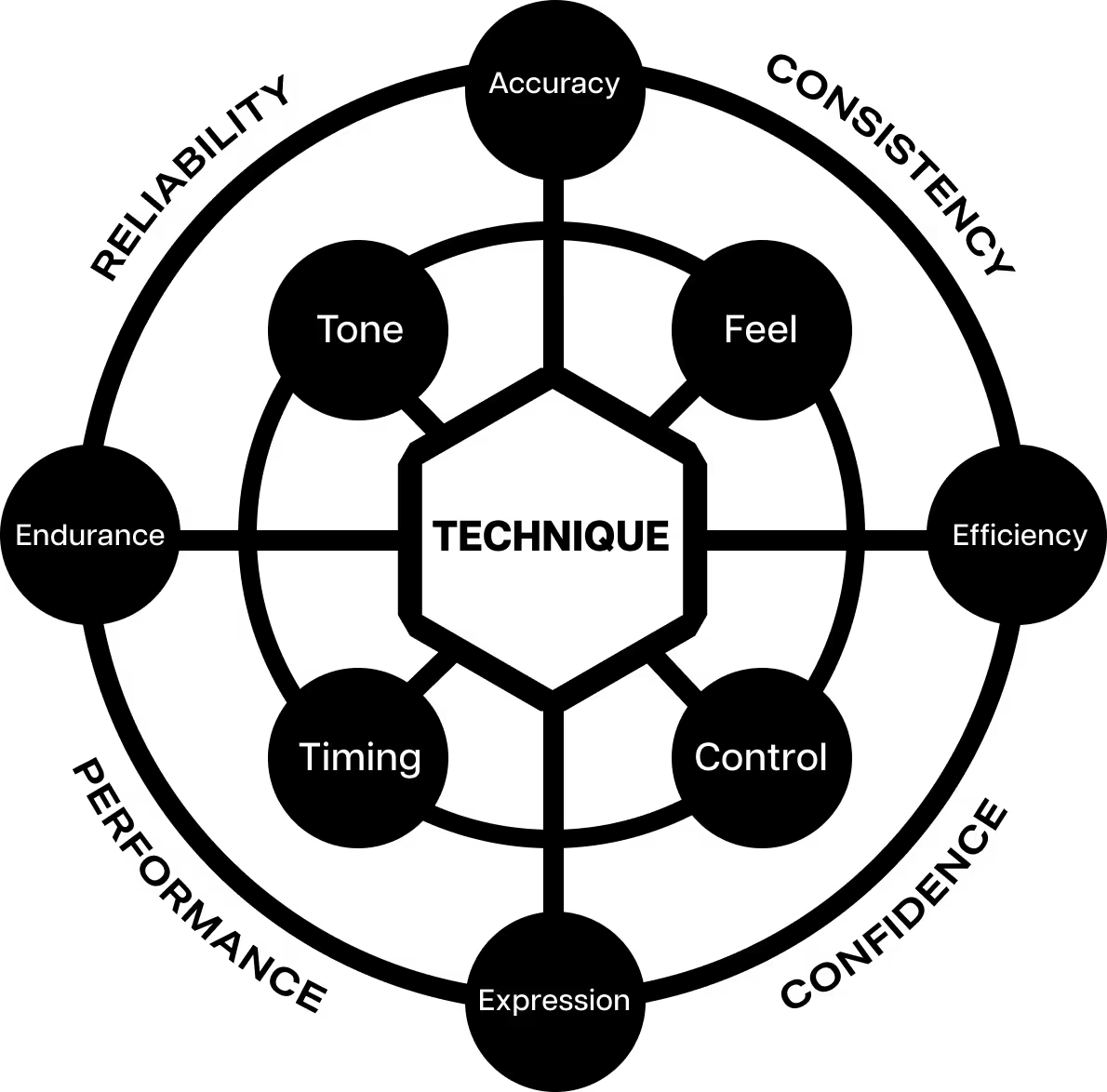
Technique is not one skill.

It’s a system.

And systems cannot be repaired while they’re running at full speed.

You don’t fix an engine by flooring the accelerator. You shut it down. Take it apart.

Fix one component at a time.
Then rebuild it — clean.
When I finally understood this, everything changed.

The moment I stopped practicing music…
and started isolating movement…

Plucking hand
Fretting hand
Muting
Shifting
String crossing
Pressure
Speed mechanics
Articulations
My motor cortex finally had room to work.
No overload.
No panic.
No compensation.

New, efficient programs could finally form.

And the results weren’t subtle.

Noise disappeared.
Movements got smaller.
Speed felt lighter.
Control showed up without effort.

The biggest shock?

Nothing I thought was “hard” on bass was actually hard.

It was just being attempted on a broken foundation.

That’s the moment the prison door unlocked.

Not with more hours. Not with more discipline.

But with a completely different way of thinking about technique.

How I Know This Really Works

(Because I Was Trapped Too)

Here’s the part that matters most.

I didn’t create this system because I wanted to teach technique.

I created it because my own playing was falling apart — and nothing I’d been taught was fixing it.

By my early 20s, I was already a full-time professional bassist.

I could read.
I knew theory.
I had gigs.
I had credentials.

From the outside, I looked “good enough.”

But behind the scenes?

My playing felt totally stuck. 

Fast lines collapsed.
Noise crept in everywhere.
My hands felt tense and unreliable.
And under pressure… things got sloppy.

The worst part?

I couldn’t explain why.

I was doing what every serious bassist does:

Practicing more
Pushing tempos
Grinding harder
Learning harder material

And it just made things worse.
That phase lasted over two years.

Two years of wondering:

“How can I be this experienced… and still feel this stuck?!”

That’s when the uncomfortable truth hit me:

I wasn’t bad.

I wasn’t lazy.

And I hadn’t hit my ceiling.

I was just practicing inside the Slop Loop Prison — exactly like everyone else.

I had been trained to bundle technique from day one.

So instead of fixing anything properly…
I was reinforcing bad mechanics at higher and higher speeds.

That’s when I did something most players never do.

I stopped practicing music.

Completely.

And I started taking my technique apart one system at a time.

Plucking hand isolated
Fretting hand — isolated
Muting — isolated
Shifting — isolated
String crossing — isolated
Pressure and tension — isolated
Hammer-ons — isolated
Pull-offs — isolated
Slides — isolated

No songs.
No groove.
No hiding.

Just clean, focused work on one dial at a time.

It took months to design the exercises.
And about six months of applying them consistently.

But when it clicked…

It was honestly shocking.

My hands stopped fighting the bass.
Speed showed up without force.
Control replaced tension.
Noise disappeared.
And suddenly… everything felt easy.

Not because I was “better.”

But because I’d rebuilt my technique from the ground up. 

That moment changed everything.

Not just how I played —
but how I understood bass.

I realised something that most players never discover:

Once technique is un-glued — everything else becomes available.

Groove.
Speed.
Dynamics.
Confidence.
Freedom.

That’s when I started teaching this approach privately.

And the same thing kept happening.

Players who’d been stuck for:
5 years
10 years
20+ years

Would suddenly say things like:

“Why did no one ever explain it like this?”
“This feels easier in weeks than it ever did before.”
“I thought I was the problem.”

They weren’t the problem.

They were just trained inside the prison.

That’s why this system exists.

Not as a theory.
Not as a shortcut.
Not as motivation.

But as a way out.

THE DISCOVERY

The Source Code of The Bass Fretboard

Over years of teaching, I noticed something consistent.

Most bass players weren’t lacking information — they were overwhelmed by it. They were learning scales, arpeggios, and patterns in isolation, without a clear way to see how it all connected.

I wasn’t looking for more material.
I was looking for a way to organise what was already there.

That’s when I revisited an age-old harmonic concept I’d learned years earlier — one that quietly sits underneath everything we play on the bass.

Scott with some fretboard diagrams overlayed

When I viewed the fretboard through that lens, something became obvious. Every scale, arpeggio, interval, and line wasn’t a separate idea at all — it was a variation of the same underlying relationships, repeated across the neck.

The fretboard isn’t a collection of patterns to memorise — it’s a single, connected map.

Once you understand those relationships, scales, arpeggios, intervals, and harmony become different views of the same structure.

That insight became the foundation for everything I teach about the fretboard — and the framework behind the Fretboard Accelerator.

This framework helps you understand the fretboard as a connected system — with a clear way to practice it, step by step, musically, and without guesswork.

INTRODUCING
A Way Out of the Slop Loop Prison

Once you understand what’s actually causing the Slop Loop, the solution becomes obvious.

You don't need:

More willpower
Longer practice sessions
Better talent
More songs
More theory

You need a way to un-glue your technique (and your motor-cortex!).

That’s why I created The Technique Accelerator.

Not as another “play this faster” course.
Not as a grab-bag of exercises.
But as a systematic way to dismantle the Slop Loop Prison from the inside.

The Technique Accelerator is built around one core principle:
Isolate→stabilise→rebuild

You cannot fix technique while everything is bundled.

This is the exact process I used to rebuild my own playing — and the same one I’ve used with thousands of bass players since.

Inside the program

How the System Works

At a high level, the Technique Accelerator works in three simple phases.

PHASE 1:
Un-Glue the System

(Isolation)

Instead of treating technique as one big, fuzzy problem, we break it into its individual movement systems, including:

Plucking-hand mechanics
Fretting-hand systems / pressure & control
Left and right hand muting (both hands working together)
Shifting & position changes
String crossing
Speed & efficiency
Articulations (hammer-ons, pull-offs, slides)

Each system is trained on its own.

No songs.
No grooves.
No distractions.

This gives your motor cortex exactly what it needs:

Less load
More clarity
Space to create new movement programs

This is where tension stops being “normal” — and starts disappearing.

PHASE 2:
Stabilise Each Dial

(Control Before Speed)

Every system comes with laser-focused exercises designed to do one thing:

… Build clean, repeatable movement without compensation.

You’re never trying to fix five things at once.

You’re fixing one dial until it works automatically.

This is where:

Noise drops off
Movements get smaller
Everything feels more fluid 
Speed starts feeling lighter
Control shows up without effort
And because each system is trained independently, progress actually sticks.

PHASE 3:
Rebuild — Clean

(Integration Without Glue)

Once the individual systems are stable, something powerful happens.

They reconnect — without re-bundling the slop.

Your playing starts to feel:

Easier
Cleaner
More controlled
Faster
More musical

Fast lines stop collapsing.
16th-note grooves stop feeling scary.
Your hands stop fighting the bass.

Not because you practiced more —but because your foundation finally works.
Phase 1:
Un-Glue the System

Normal Price $299

Instead of treating technique as one big, fuzzy problem, we break it into its individual movement systems, including:

  • Plucking-hand mechanics
  • Fretting-hand systems / pressure & control
  • Left and right hand muting (both hands working together)
  • Shifting & position changes
  • String crossing
  • Speed & efficiency
  • Articulations (hammer-ons, pull-offs, slides)

Each system is trained on its own.

No songs.
No grooves.
No distractions.

This gives your motor cortex exactly what it needs:

  • Less load
  • More clarity
  • Space to create new movement programs

This is where tension stops being “normal” — and starts disappearing.

What's Included

Check
Get instant access to my 12 module A4 method curriculum
Check
24+ hours of step-by-step lessons
Check
Downloadable tracks, tabs, and practice tools
26 modules to transform your technique in 20 mins a day
6 pre-recorded live seminars
Exclusive Bonus Interview with Billy Sheehan
Beautifully designed workbooks with full tab & notation
All levels: Beginner, intermediate, advanced

“I just want to say how happy I am with the program ! This one combined with the Practice accelerator is a real deal to get massive improvements over little time”

– Ruzette (Technique Accelerator)

“I just want to say how happy I am with the program ! This one combined with the Practice accelerator is a real deal to get massive improvements over little time”

– Ruzette (Technique Accelerator)

Phase 2:
Stabilise Each Dial

Control Before Speed

Every system comes with laser-focused exercises designed to do one thing:

… Build clean, repeatable movement without compensation.

You’re never trying to fix five things at once.

You’re fixing one dial until it works automatically.

This is where:

  • Noise drops off
  • Movements get smaller
  • Everything feels more fluid 
  • Speed starts feeling lighter
  • Control shows up without effort

And because each system is trained independently, progress actually sticks.

What's Included

Check
Get instant access to my 12 module A4 method curriculum
Check
24+ hours of step-by-step lessons
Check
Downloadable tracks, tabs, and practice tools
16 in-depth modules taking the guesswork out of the fretboard
20+ hours of step-by-step pristine HD video lessons
5 pre-recorded live seminars
Beautifully designed workbooks with full tab & notation
All levels: Beginner, intermediate, advanced
3 Bonuses Worth $XXX

What You'll Learn

Jump between positions effortlessly
Understand the neck like never before
Nail tricky bass lines with confidence
And do it all in just 30 minutes a day

What's Included

Check
Get instant access to my 12 module A4 method curriculum
Check
24+ hours of step-by-step lessons
Check
Downloadable tracks, tabs, and practice tools
16 modules to boost your confidence & fluency
A crystal-clear method for mastering the entire neck
Step-by-step pristine HD video lessons
Beautifully designed workbooks with full tab & notation
All levels: Beginner, intermediate, advanced
Lifetime access
3 Bonuses Worth $XXX

Plus 2 FREE Bonuses (Worth $XXX)

You'll also get 2 bonuses that perfectly complement the curriculum, to accelerate your progress & deepen your mastery.
$XXX FREE
$XXX FREE

“I just want to say how happy I am with the program ! This one combined with the Practice accelerator is a real deal to get massive improvements over little time”

– Ruzette (Technique Accelerator)

“I just want to say how happy I am with the program ! This one combined with the Practice accelerator is a real deal to get massive improvements over little time”

– Ruzette (Technique Accelerator)

Phase 3:
Rebuild — Clean

Normal Price $299

(Integration Without Glue)

Once the individual systems are stable, something powerful happens.

They reconnect — without re-bundling the slop.

Your playing starts to feel:

  • Easier
  • Cleaner
  • More controlled
  • Faster 
  • More musical

Fast lines stop collapsing.
16th-note grooves stop feeling scary.
Your hands stop fighting the bass.

Not because you practiced more —but because your foundation finally works.

What's Included

Check
Get instant access to my 12 module A4 method curriculum
Check
24+ hours of step-by-step lessons
Check
Downloadable tracks, tabs, and practice tools
8 in-depth modules to transform how you practice
32 step-by-step HD video lessons
Worksheets, charts, and recommended listening guides.
All levels: Beginner, intermediate, advanced
3 Bonuses Worth $XXX
Worth $299
COURSE BREAKDOWN

Inside The Technique Accelerator Curriculum

GET instant access to all modules
Here's a closer look inside the program
Module 01

The Ultimate Technique Foundation

  • Video 1: Module 1 Introduction
  • Video 2: What is the Cycle of 5ths?
  • Video 3: Major Triad / Root Position / Shape 1
  • Video 4: Major Triad / Root Position / Shape 2
  • Video 5: Major Triad / Root Position / Shape 3
  • Video 6: Combining Shapes / Position 1
  • Video 7: Combining Shapes / Position 2
  • Video 8: Combining Shapes / Position 3
  • Video 9: Module 1 Wrap Up
  • Workbook
  • Play Along Tracks
  • Exercises

(Most modules have between 60 and 90 minutes of HD video)
Module 02

Your Engine Room Part 1

  • Video 1: Module 2 Introduction
  • Video 2: What are Triad Inversions?
  • Video 3: Major Triad / 1st Inversion / Shape 1
  • Video 4: Major Triad / 1st Inversion / Shape 2
  • Video 5: Major Triad / 1st Inversion / Shape 3
  • Video 6: Combining Shapes / Position 1
  • Video 7: Combining Shapes / Position 2
  • Video 8: Combining Shapes / Position 3
  • Video 9: Module 2 Wrap Up
  • Workbook
  • Play Along Tracks
  • Exercises

(Most modules have between 60 and 90 minutes of HD video)
Module 03

Your Engine Room Part 2

  • Video 1: Module 3 Introduction
  • Video 2: 2nd Inversion Checkup
  • Video 3: Major Triad / 2nd inversion / Shape 1
  • Video 4: Major Triad / 2nd inversion / Shape 2
  • Video 5: Major Triad / 2nd inversion / Shape 3
  • Video 6: Combining Shapes / Position 1
  • Video 7: Combining Shapes / Position 2
  • Video 8: Combining Shapes / Position 3
  • Video 9: Module 3 Wrap Up
  • Workbook
  • Play Along Tracks
  • Exercises

(Most modules have between 60 and 90 minutes of HD video)
Module 04

Your Engine Room Part 3

recorded seminar
  • Video 1: Module 4 Introduction
  • Video 2: Major Triad Continuous Movement Exercises / Position 1
  • Video 3: Major Triad Continuous Movement Exercises / Position 2
  • Video 4: Major Triad Continuous Movement Exercises / Position 3
  • Video 5: Module 4 Wrap Up
  • Workbook
  • Play Along Tracks
  • Exercises

(Most modules have between 60 and 90 minutes of HD video)
Module 05
Fretting Hand Essentials + Bonus Interview with Billy Sheehan

A previously recorded seminar with Scott Devine, where Fretboard Accelerator students get their questions answered.

Module 06

All of your burning questions answered!

  • Video 1: Module 5 Introduction
  • Video 2: Minor Triad Checkup
  • Video 3: Minor Triad / Root inversion / Shape 1
  • Video 4: Minor Triad / Root inversion / Shape 2
  • Video 5: Minor Triad / Root inversion / Shape 3
  • Video 6: Combining Shapes / Position 1
  • Video 7: Combining Shapes / Position 2
  • Video 8: Combining Shapes / Position 3
  • Video 9: Module 5 Wrap Up
  • Workbook
  • Play Along Tracks
  • Exercises

(Most modules have between 60 and 90 minutes of HD video)
Module 07

Plucking Hand Finger Independence Workout Part 1

  • Video 1: Module 6 Introduction
  • Video 2: 1st Inversion Minor Triads
  • Video 3: Minor Triad / 1st inversion / Shape 1
  • Video 4: Minor Triad / 1st inversion / Shape 2
  • Video 5: Minor Triad / 1st inversion / Shape 3
  • Video 6: Combining shapes / Position 1
  • Video 7: Combining shapes / Position 2
  • Video 8: Combining shapes / Position 3
  • Video 9: Module 6 Wrap Up
  • Workbook
  • Play Along Tracks
  • Exercises

(Most modules have between 60 and 90 minutes of HD video)
Module 08

Finger Independence Workout Part 2

recorded seminar
  • Video 1: Module 7 Introduction
  • Video 2: 2nd Inversion Minor Check-Up
  • Video 3: Minor Triad / 2nd inversion / Shape 1
  • Video 4: Minor Triad / 2nd inversion / Shape 2
  • Video 5: Minor Triad / 2nd inversion / Shape 3
  • Video 6: Combining shapes / Position 1
  • Video 7: Combining shapes / Position 2
  • Video 8: Combining shapes / Position 3
  • Video 9: Module 7 Wrap Up
  • Workbook
  • Play Along Tracks
  • Exercises

(Most modules have between 60 and 90 minutes of HD video)
  • Video 1: Module 8 Introduction
  • Video 2: Minor Triad Continuous Movement Exercises / Position 1
  • Video 3: Minor Triad Continuous Movement Exercises / Position 2
  • Video 4: Minor Triad Continuous Movement Exercises / Position 3
  • Video 5: Module 8 Wrap Up
  • Workbook
  • Play Along Tracks
  • Exercises

(Most modules have between 60 and 90 minutes of HD video)
Module 09

Speed Builder  Part 1

A previously recorded seminar with Scott Devine, where Fretboard Accelerator students get their questions answered.

Module 10

Speed Builder  Part 2

  • Video 1: Module 9 Introduction
  • Video 2: What is a I vi ii V Chord Progression?
  • Video 3: I iv ii V Continuous Movement Exercises / Position 1
  • Video 4: I iv ii V Continuous Movement Exercises / Position 2
  • Video 5: I iv ii V Continuous Movement Exercises / Position 3
  • Video 6: Module 9 Wrap Up
  • Workbook
  • Play Along Tracks
  • Exercises

(Most modules have between 60 and 90 minutes of HD video)
Module 11

Speed Builder  Part 3

A previously recorded seminar with Ian King, where Fretboard Accelerator students get their questions answered.

Module 12

Speed Builder  Part 4

recorded seminar
  • Video 1: Module 10 Introduction
  • Video 2: Augmented Triad Check-Up
  • Video 3: Aug Triad / Root inversion / Shape 1
  • Video 4: Aug Triad / Root inversion / Shape 2
  • Video 5: Aug Triad / Root inversion / Shape 3
  • Video 6: Combining shapes / Position 1
  • Video 7: Combining shapes / Position 2
  • Video 8: Combining shapes / Position 3
  • Video 9: Module 10 Wrap Up
  • Workbook
  • Play Along Tracks
  • Exercises

(Most modules have between 60 and 90 minutes of HD video)
Module 13

Fingerboard Shifting Systems

  • Video 1: Module introduction
  • Video 2: 1st Inversion Augmented Triads
  • Video 3: Aug Triad / Root inversion / Shape 1
  • Video 4: Aug Triad / Root inversion / Shape 2
  • Video 5: Aug Triad / Root inversion / Shape 3
  • Video 6: Combining shapes / Position 1
  • Video 7: Combining shapes / Position 2
  • Video 8: Combining shapes / Position 3
  • Video 9: Module 11 Wrap Up
  • Workbook
  • Play Along Tracks
  • Exercises

(Most modules have between 60 and 90 minutes of HD video)
Module 14

Fretting Hand Fingering Positions

  • Video 1: Module 12 Introduction
  • Video 2: 2nd Inversion Augmented Check-Up
  • Video 3: Aug Triad / Root inversion / Shape 1
  • Video 4: Aug Triad / Root inversion / Shape 2
  • Video 5: Aug Triad / Root inversion / Shape 3
  • Video 6: Combining shapes / Position 1
  • Video 7: Combining shapes / Position 2
  • Video 8: Combining shapes / Position 3
  • Video 9: Module 12 Wrap Up
  • Workbook
  • Play Along Tracks
  • Exercises

(Most modules have between 60 and 90 minutes of HD video)
Module 15

Diatonic Harmony & Harmonic Analysis

  • Video 1: Module 13 introduction
  • Video 2: Aug Triad Continuous Movement Exercises / Position 1
  • Video 3: Aug Triad Continuous Movement Exercises / Position 2
  • Video 4: Aug Triad Continuous Movement Exercises / Position 3
  • Video 5: Module 13 Wrap Up
  • Workbook
  • Play Along Tracks
  • Exercises

(Most modules have between 60 and 90 minutes of HD video)
Module 16

Essential Approaches to Hammer-ons & Pull-offs

A previously recorded seminar with Scott Devine, where Fretboard Accelerator students get their questions answered.

Module 17

Seminar: Essential Groove Articulations

recorded seminar
  • Video 1: Module 14 introduction
  • Video 2: Diminished Triad Checkup
  • Video 3: Diminished Triad / Root position / Shape 1
  • Video 4: Diminished Triad / Root position / Shape 2
  • Video 5: Diminished Triad / Root position / Shape 3
  • Video 6: Combining shapes / Position 1
  • Video 7: Combining shapes / Position 2
  • Video 8: Combining shapes / Position 3
  • Video 9: Module 14 Wrap Up
  • Workbook
  • Play Along Tracks
  • Exercises

(Most modules have between 60 and 90 minutes of HD video)
Module 18

Palm Muting Deep Dive

  • Video 1: Module 15 introduction
  • Video 2: Diminished Triad Inversion Checkup
  • Video 3: Diminished Triad / 1st inversion
  • Video 4: Diminished Triad / 2nd inversion
  • Video 5: Combining all Diminished Inversions
  • Video 6: Module 15 Wrap Up
  • Workbook
  • Play Along Tracks
  • Exercises

(Most modules have between 60 and 90 minutes of HD video)
Module 19

Ghost Notes   Part 1

  • Video 1: Module 16 introduction
  • Video 2: What is a I–IV–iii–biii–ii–V Chord Progression?
  • Video 3: I–IV–iii–biii–ii–V Continuous Movement Exercises / Position 1
  • Video 4: I–IV–iii–biii–ii–V Continuous Movement Exercises / Position 2
  • Video 5: I–IV–iii–biii–ii–V Continuous Movement Exercises / Position 3
  • Video 9: Module 16 Wrap Up
  • Workbook
  • Play Along Tracks
  • Exercises

(Most modules have between 60 and 90 minutes of HD video)
Module 20

Ghost Notes   Part 2

Module 21

Ghost Notes   Part 3

Module 22

Essential Pick Exercises    Part 1

recorded seminar
Module 23

Essential Pick Exercises    Part 2

Module 24

Slap Bass    Part 1

Module 25

Slap Bass    Part 2

Module 26

The Ultimate Practice Framework for your Technique
recorded seminar

A previously recorded seminar with Scott Devine, where Fretboard Accelerator students get their questions answered.

Module 01

The Ultimate Technique Foundation

Module 02

Your Engine Room Part 1

Module 03

Your Engine Room Part 2

Module 04

Your Engine Room Part 3

Module 05

Fretting Hand Essentials + Bonus Interview with Billy Sheehan

Module 06

All of your burning questions answered!

recorded Q&A
Module 07

Plucking Hand Finger Independence Workout Part 1

Module 08

Finger Independence Workout Part 2

Module 09

Speed Builder  Part 1

Module 10

Speed Builder  Part 2

Module 11

Speed Builder  Part 3

Module 12

Speed Builder  Part 4

Module 13

Fingerboard Shifting Systems

Module 14

Fretting Hand Fingering Positions

Module 15

Diatonic Harmony & Harmonic Analysis

Module 16

Essential Approaches to Hammer-ons & Pull-offs

Module 17

Essential Groove Articulations

Module 18

Palm Muting Deep Dive

Module 19

Ghost Notes Part 1

Module 20

Ghost Notes Part 2

Module 21

Ghost Notes Part 3

Module 22

Essential Pick Exercises Part 1

Module 23

Essential Pick Exercises  Part 2

Module 24

Slap Bass  Part 1

Module 25

Slap Bass  Part 2

Module 26

The Ultimate Practice Framework for your Technique

The 20-Minute Rule

(Why This Fits Real Life)

The Technique Accelerator is built around ~20 minutes of focused practice per day.

That’s not a limitation.
It’s a feature.

Short, precise sessions:

Check
Keep the motor cortex fresh
Check
Prevent overload
Check
Stop old compensations from creeping back in

This is why players feel changes fast — often within the first few weeks.

Student playing bass

What This Is (And Isn’t)

This is:
Check
A diagnostic system
Check
A complete rebuild process
Check
A new approach to technique 
Check
A repeatable framework you can return to anytime slop creeps back in
This is not:
A lick library
A speed challenge
A “play harder and hope” approach
This is:
Check
A diagnostic system
Check
A complete rebuild process
Check
A new approach to technique 
Check
A repeatable framework you can return to anytime slop creeps back in
This is not:
A lick library
A speed challenge
A “play harder and hope” approach

It’s how you permanently escape the Slop Loop Prison.

See Everything Inside the Technique Accelerator

This Isn’t Theory — It’s Been Pressure-Tested for Years.

At this point, one question should be floating around in your head:

“OK… but does this actually work in the real world?”

Fair question.

Because the Technique Accelerator isn’t a thought experiment.
It’s not a new idea.
And it’s definitely not untested.

This system has been quietly doing its job for a long time.

Student playing bass

Over 20,000 Bass Players Have Been Through This System

The Technique Accelerator is one of the most widely used programs I’ve ever created.

Over 20,000 bass players — across all styles, levels, and backgrounds — have worked through this exact approach to fixing their technique.

Players who:

Had been stuck for years
Thought their hands were “the problem”
Felt tense, messy, and unreliable
Believed they’d hit their ceiling

And experienced the same thing:

👉 Things that used to feel hard… suddenly didn’t.

Had been stuck for years
Thought their hands were “the problem”
Felt tense, messy, and unreliable
Believed they’d hit their ceiling

And experienced the same thing:

👉 Things that used to feel hard… suddenly didn’t.

Used Quietly by Working Pros (For a Reason)

Here’s something interesting.

While this isn’t my most mass-market program…

It is the one that more working professionals and high-level players have gone through than almost any other Accelerator I’ve released.

Some of them very well known.
Some of them household names.

I can’t mention names — for obvious reasons.
But here’s what matters:

They didn’t come here to learn licks.
They didn’t need more theory.
And they definitely weren’t beginners.

They came because they understood something most players never do:

When technique is even slightly off…
it caps everything.

Speed. Control. Consistency. Dynamics. Confidence.

So instead of grinding harder…
they fixed the foundation.

Quietly.
Systematically.
Properly.

Over 20,000 Bass Players Have Been Through This System

The Technique Accelerator is one of the most widely used programs I’ve ever created.

Over 20,000 bass players — across all styles, levels, and backgrounds — have worked through this exact approach to fixing their technique.

Players who:

Had been stuck for years
Thought their hands were “the problem”
Felt tense, messy, and unreliable
Believed they’d hit their ceiling

And experienced the same thing:

👉 Things that used to feel hard… suddenly didn’t.

Had been stuck for years
Thought their hands were “the problem”
Felt tense, messy, and unreliable
Believed they’d hit their ceiling

And experienced the same thing:

👉 Things that used to feel hard… suddenly didn’t.

Student reviews

What Players Actually Say

(After Escaping the Slop Loop)

I’ve been playing bass for over 8 years and always felt like my hands were holding me back. Within the first couple of weeks, my playing felt cleaner, lighter, faster and way more controlled. I honestly wish I’d done this years ago.

— Mark S

By week four I could already feel the difference. Less noise. Less effort. Faster lines stopped falling apart. It was obvious something big had shifted.

— Jason R

I didn’t realise how much tension I was carrying until it was gone! Everything feels easier now… even stuff I used to avoid.

— Chris D

I’m a working bassist and honestly embarrassed it took me this long to fix my technique. This cleaned up years of bad habits faster than anything I’ve tried.

— Ben K

These aren’t beginners discovering bass for the first time.

These are players who already put the hours in — and finally fixed what was holding them back.

Why This Works When Other Things Don’t

This system doesn’t rely on:

  • Motivation
  • Discipline
  • Talent
  • Willpower

It works because it aligns with how the body actually learns complex movement.

When you:

Check
Reduce overload
Check
Isolate movement
Check
Build clean motor programs
Check
Reconnect without compensation

Progress becomes predictable.

That’s not hype.
That’s physiology.
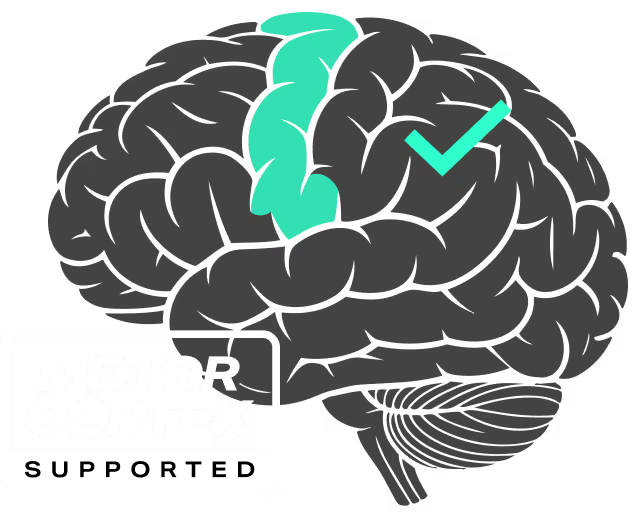
And it’s why this approach keeps working — year after year, player after player.

FREE BONUSes

YOUR FREE Bonuses

You'll also get access to these incredible bonuses — free when you join today.

FREE BONUS #1 —

16 Weeks of Live Guided Practice Coaching Sessions
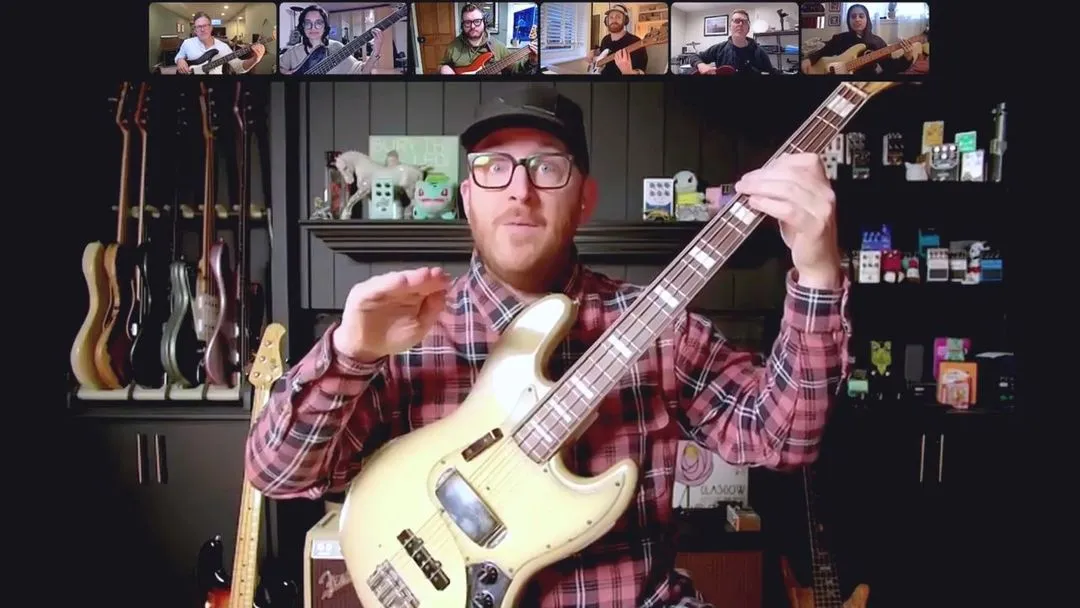
With Craig strain
Value $800  FREE
Live Coaching Session
Exclusive Bonus by Craig Strain

Craig Strain is a touring pro, studio regular, and longtime SBL coach known for making complex material feel totally playable.

These are weekly live sessions where you:

Have your bass in hand
Work directly on the Technique Accelerator exercises with an SBL coach
Practice the exact movements you’re rebuilding
Get real-time feedback when something’s off
Ask questions in the moment — not weeks later

This isn’t a lecture.
It’s not a Q&A show.
And it’s definitely not me “playing at you.”

It’s applied work — while it actually matters.

Why Most Players Still Fail With “Great” Programs
(And How This Fixes That)

Let me be straight with you.

Most bass players don’t fail because the material is bad.

They fail because implementation breaks down.

Here’s the pattern I’ve seen for years:

People buy a solid program.
They’re excited.
They start strong.

Then…

Life gets busy.
Practice becomes inconsistent.
Small technical mistakes go unchecked.
Momentum fades.

Not because they don’t care —
but because nobody’s watching the details that actually matter.

That’s exactly why guided practice exists inside the Technique Accelerator.

Not as motivation.
Not as hype.
Not as “rah rah accountability.”

But as a structure that protects progress.

Why This Matters More Than People Expect

Here’s the truth most players don’t want to hear:

Technique doesn’t fall apart because people don’t know what to do.

It falls apart because:

Tiny mistakes go uncorrected
Compensations sneak in
Tension creeps back unnoticed
Apply it musically
Old habits quietly reassert themselves

And once that happens?
You’re back inside the Slop Loop — without even realising it.

Our Guided Practice sessions interrupt that cycle.

They:

Catch problems early
Stop compensations from re-forming
Keep movements clean while they’re still fragile
Reinforce efficiency before tension gets re-learned

This is how change actually sticks.

Read more about this bonusRead Less
FREE BONUS #2 —

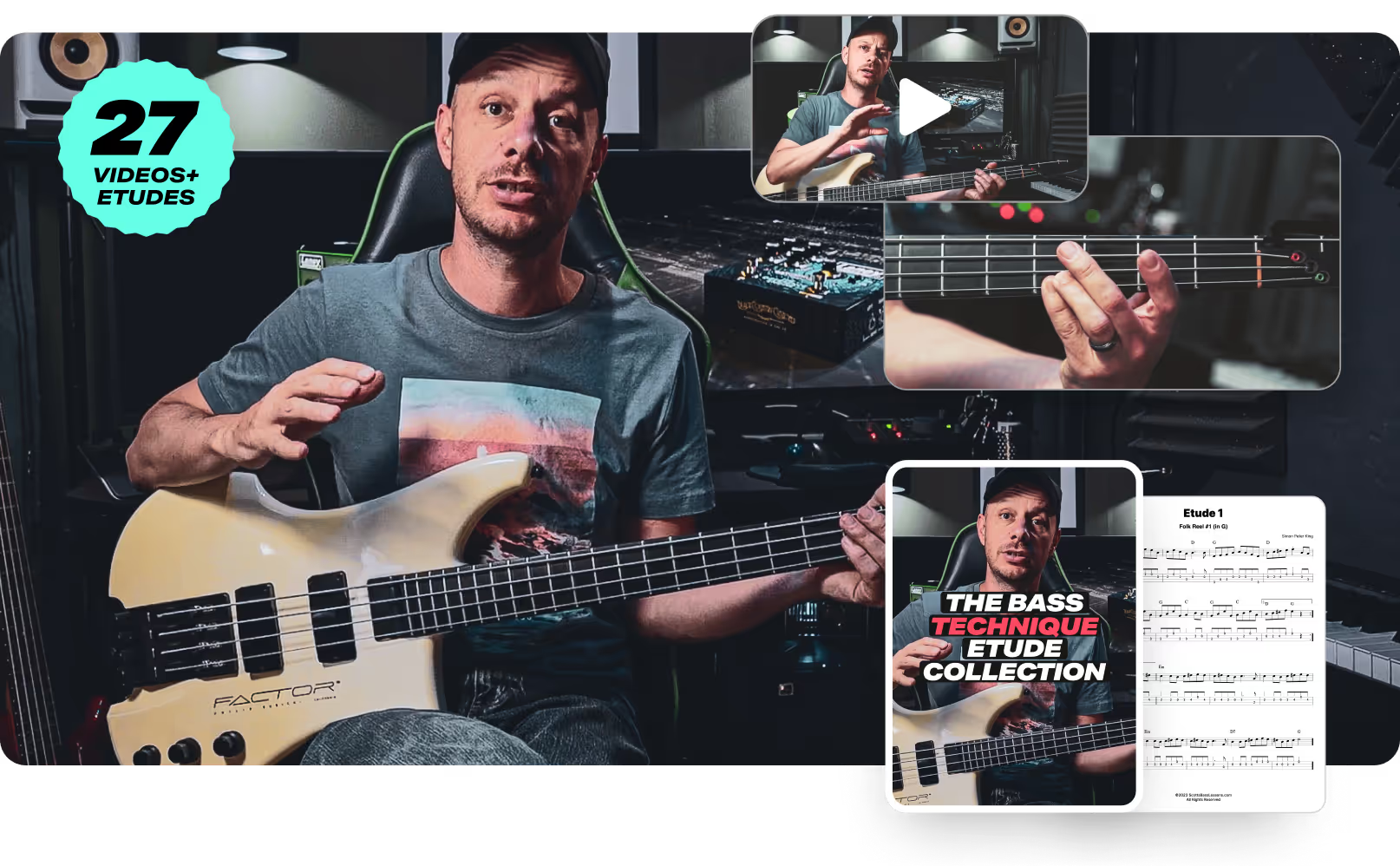
The Bass Technique Etude Collection

Value $127  FREE

An Exclusive Bonus by Simon King

Head of SBL Coaching
Simon King is a bassist with decades of professional experience, multiple studio credits, and a reputation for breaking down complex musical ideas in a way that sticks. This bonus is absolute gold.

This bonus is designed to help you turn clean mechanics into confident music.

Here's what you get:

27 carefully designed melodic etudes
Beginner → advanced levels
Multiple styles (funk, jazz, classical, groove-based, lyrical)
7+ hours of step-by-step breakdowns
Every piece demonstrated and explained in detail

This isn’t a random song pack.

It’s structured musical reinforcement.

$127 value — Included when you enroll

Why This Exists

Here’s the danger:

You clean up your mechanics…

Then you jump back into songs.

And tension, noise, and compensation quietly creep back in.

These etudes prevent that.

They’re written specifically to reinforce clean movement inside real music — without overwhelming your motor cortex again.

Read more about this bonusRead Less
LIMITED TIME

Early Enrollment Bonus

(Only available for a limited time — while the countdown is live!)

Get an extra bonus for taking action now — ends Monday March 2nd
EXTRA BONUS —

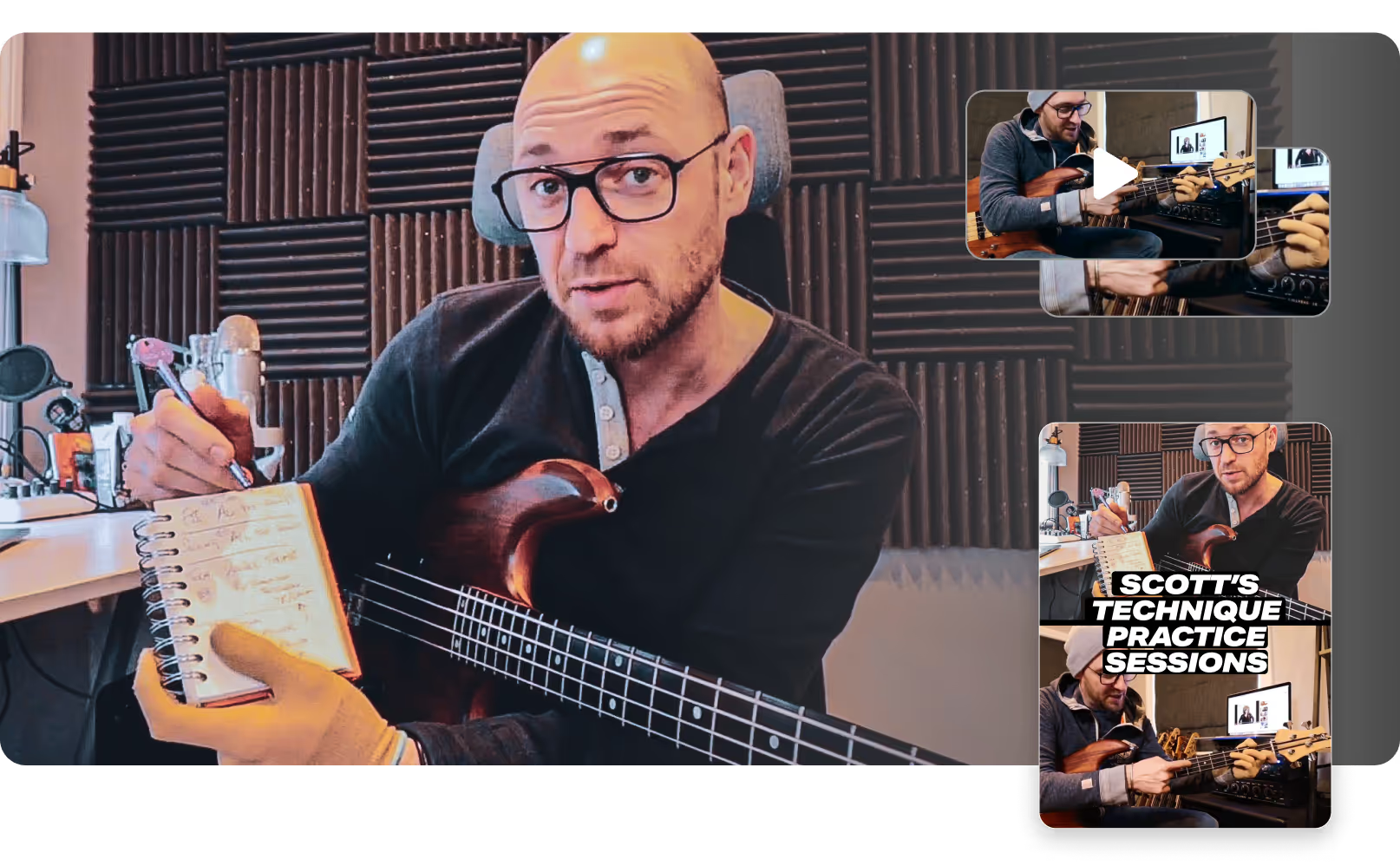
Scott’s Personal Technique Practice Sessions

$97  FREE

Most players don’t fail because they lack the right exercises. They fail because they practice them wrong. So I’m giving you something most instructors never show.

Behind-the-scenes sessions where...

...you watch me practice the Technique Accelerator exercises myself.

Not polished.
Not performance mode.
Real training.

You’ll see:

How slow is actually slow enough
What I focus on during reps
How I catch tension before it builds
How I correct micro-errors immediately
When to move on — and when not to
How to structure a focused 20-minute session

This bridges the gap between:

Knowing the system
and
Executing it properly

If you apply the exercises incorrectly, you reinforce slop.

This ensures you don’t.

Included free when you enroll before [deadline].

Read more about this bonusRead Less
⏳ This Early Enrollment Bonus disappears when the timer reaches zero
👉 Enroll in The Technique Accelerator
[timer]
Risk-free. 30 Day 100% Money Back Guarantee
Enroll now

Everything You Get in The Technique Accelerator
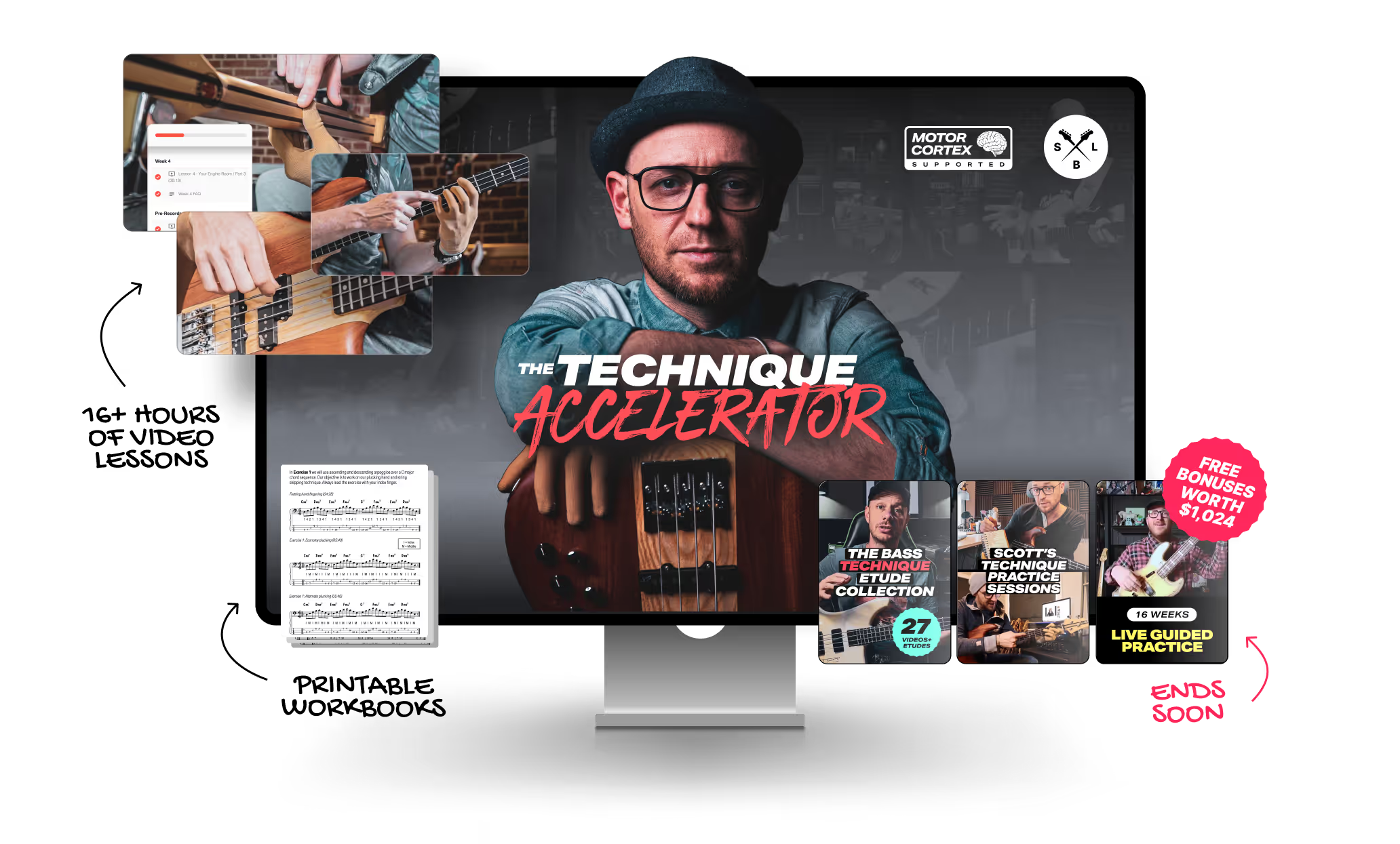
What's Included

Let’s zoom out for a second.
This isn’t just a course.

It’s a complete system designed to:

Diagnose what’s actually breaking down
Rebuild each technical system in isolation
Reinforce clean movement
Apply it musically
Protect it long-term
Here’s exactly what’s included.

The Complete Technique
Accelerator Curriculum

Value $299

A structured, step-by-step system that breaks technique into individual components and rebuilds them properly.

No guessing. No overwhelm. No grinding.

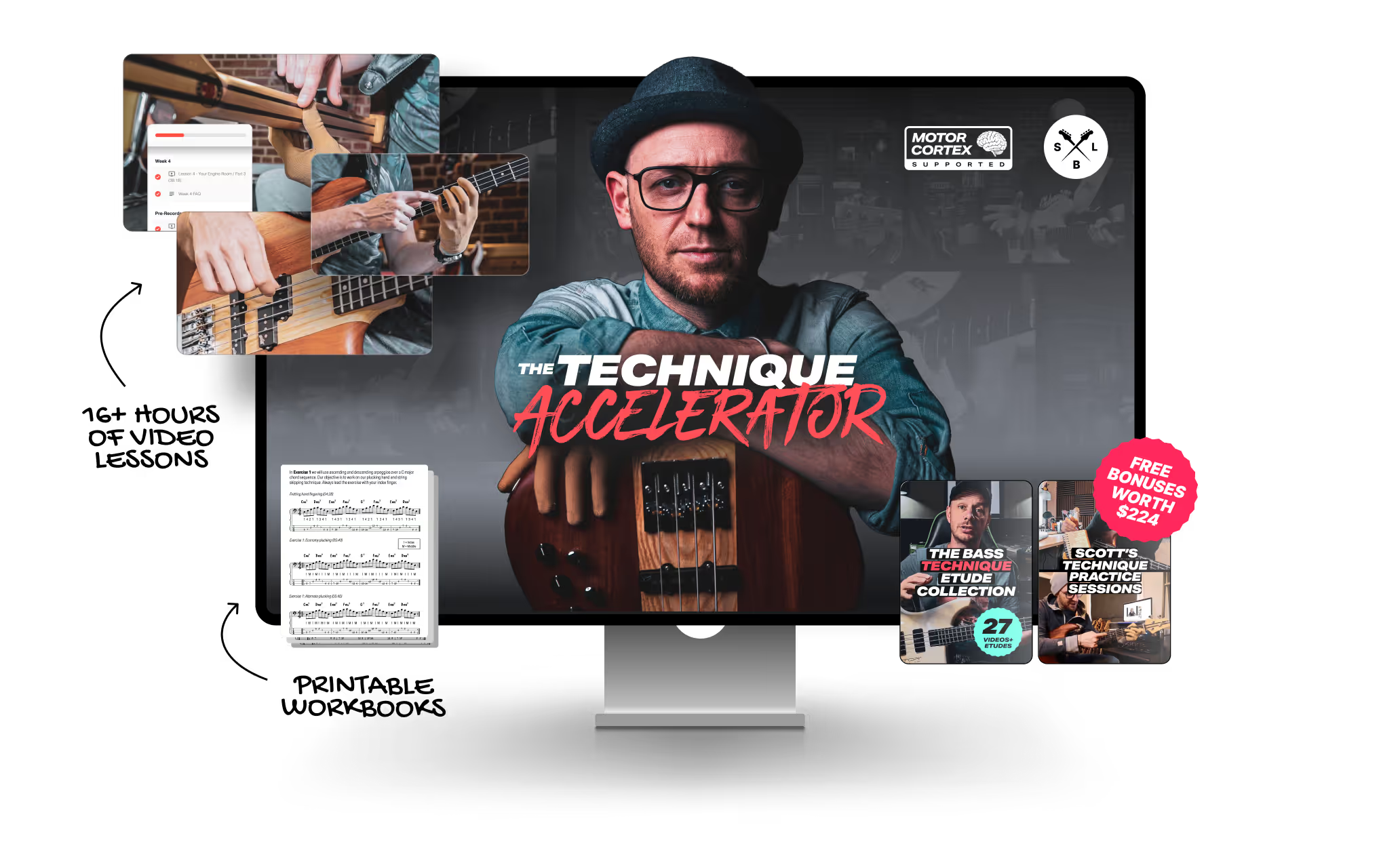
26 in-depth modules
Over 16 hours of lessons
All levels: Beginner, intermediate, advanced
Access to all pre-recorded Q&As

Topics covered:

Plucking-hand mechanics
Fretting-hand pressure & control
Fretting hand fingering systems 
Muting (both hands working together)
Shifting & position changes
String crossing
Speed & efficiency
Dynamic control 
Synchronisation
Articulations (hammer-ons, pull-offs, slides)
Slap bass strategies  
Pick and slap integration
And much more

Designed for 20 minutes of focused practice per day — so progress is consistent + sustainable.

16 Weeks of Live Guided Practice Coaching

$800  FREE

4+ months of structured oversight to ensure:
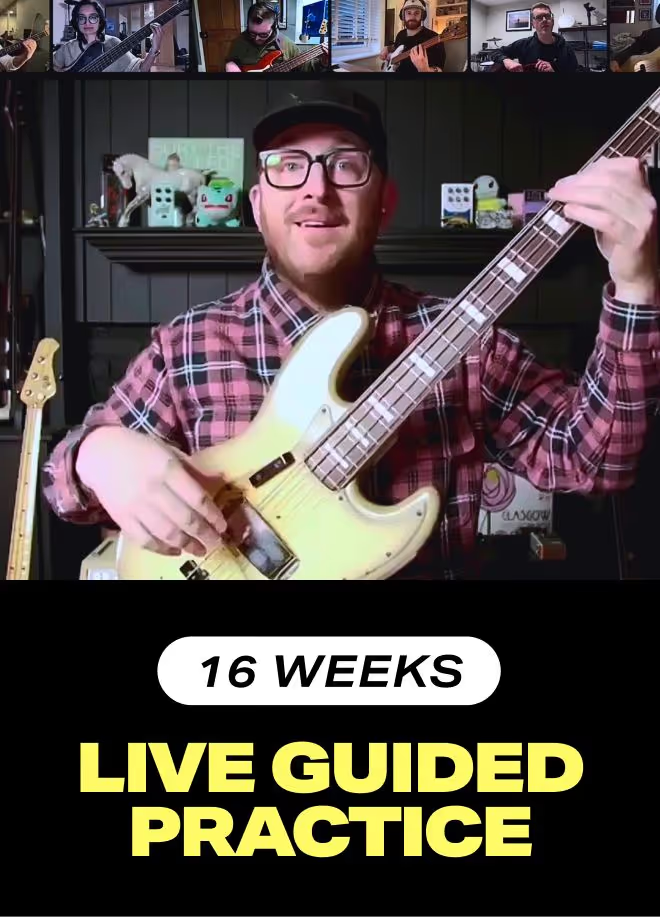
You apply the system correctly
You don’t reintroduce tension
Micro-errors are corrected early
Momentum stays intact
You have someone by your side each and every week 

The Bass Technique Etude Collection

$127  FREE

27 melodic etudes across styles and levels.

Structured musical reinforcement so your clean mechanics hold up inside real music.

Early Enrollment Bonus
(Ends Soon)

$97  FREE

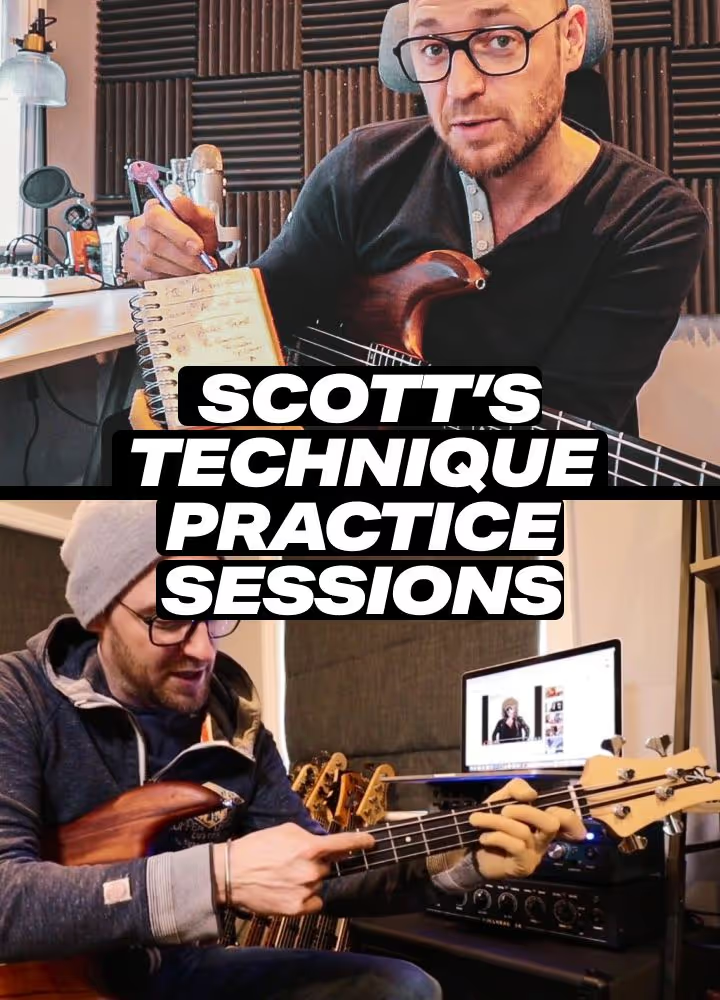
Scott’s Personal Technique Practice Sessions 

Behind-the-scenes sessions showing exactly how to practice the exercises correctly — so you don’t accidentally reinforce slop while trying to escape it.

Included when you enroll before the deadline.
Total Value: $1,323
Total Value: $1,226
Special Price: $299 $249
👉 Enroll in The Technique Accelerator
Early Enrollment Bonus disappears when timer reaches zero
⏳ Doors close when timer reaches zero
[timer]
Risk-free. 30 Day 100% Money Back Guarantee

What This Program Really Gives You

Most importantly, this program removes the invisible ceiling that’s been capping your progress for years.

It gives you:

Clean, controlled technique
Speed without force
Confidence under pressure
Freedom to play what you actually hear

Join The Technique Accelerator

⏳ Doors close soon. Once they do, this intake — and the live coaching, disappear.

Special Price: $299 $249
👉 Enroll in The Technique Accelerator
Early Enrollment Bonus disappears when timer reaches zero
⏳ Doors close when timer reaches zero
[timer]
Risk-free. 30 Day 100% Money Back Guarantee

Who This is For

(And Who It’s Not)

Let’s make this simple.

The Technique Accelerator is for bass players who are already up and running…

…but feel like their hands are the bottleneck.

This program is for you if:

Check
You’ve been playing for a while (maybe even years) but still sound messy
Check
You feel like you’ve hit a ceiling and just can’t get past it 
Check
You want fluid / effortless technique like the pro’s have 
Check
Faster lines fall apart 
Check
Your muting isn’t as clean as you’d like
Check
Tension creeps in when speed increases
Check
Your hands don’t always do what your brain hears
Check
You’re tired of sounding “almost there”

It works whether you’re
Beginner Advanced.

Because the exercises scale.

Beginners build clean habits from day one.
Intermediate players strip away years of built-up slop.
Advanced players remove inefficiency and hidden tension.

Same system.
Different entry point.

This is NOT for you if…

You’re looking for shortcuts
You want flashy licks without fixing your foundation
You believe more hours alone will magically fix everything
You’re unwilling to slow down to rebuild properly

This program requires precision.

It requires attention.

It requires doing things correctly.

But not endlessly.
Not obsessively.
Just intentionally.
The Real Question

Are you willing to fix the foundation once… so you never have to fight your technique again?

If the answer is yes —

If the answer is “I’ll sort it out someday”…

Then you already know how that story goes.

30-Day “Rebuild It Properly” Guarantee

Here’s how this works.

You join.

You go through the system properly.

You practice the exercises as designed.

You attend the guided practice sessions.

You apply it to your real playing.

For a full 30 days.

If after doing the work you genuinely feel like:

“This didn’t clean things up.”
“This didn’t make playing feel easier.”
“This wasn’t worth it.”

Email us.

You get your money back.

No interrogation.
No awkward back-and-forth.
No hoops.

Simple.

Why I Offer This Guarantee

Because this isn’t hype.

This isn’t “watch and hope.”

This is applied motor learning.

If you isolate the weak links…
Fix one dial at a time…
And practice correctly for four weeks…

You will feel a difference.

Not because you believed harder.
Not because you tried harder.
But because your motor cortex finally had room to learn properly.

And if for some reason it doesn’t click for you?

You’re not stuck with it.

That’s the deal.

The Real Risk

The real risk isn’t joining.

The real risk is staying inside the Slop Loop for another year…
and telling yourself you’ll “sort it out later.”

You won’t.

Not without changing how you approach the bass. 

So try it properly.

30 days.
Real practice.
Real feedback.
Zero risk.

Student playing bass
Risk-free. 30 Day 100% Money Back Guarantee

The Real Risk

The real risk isn’t joining.

The real risk is staying inside the Slop Loop for another year…
and telling yourself you’ll “sort it out later.”

You won’t.

Not without changing how you approach the bass. 

So try it properly.

30 days.
Real practice.
Real feedback.
Zero risk.

👉 Join The Technique Accelerator

This is the Moment Most Bass Players Avoid.

Right now, you know something most bass players never realise:

You don’t have a motivation problem.
You don’t have a time problem.
You don’t have a talent problem.

You have a system problem.

And systems don’t fix themselves.

If you do nothing…

You’ll keep playing.
You’ll keep practicing.
You’ll keep sounding “pretty good.”

And every time something demanding shows up —
fast 16ths…
tight funk…
clean articulation at speed…

The same ceiling will be there.

Not because you can’t.
But because the foundation was never rebuilt.

Two Paths

X

Path 1

Figure it out alone

Do what you’ve always done.
Hope it cleans up.
Work around it.
Live inside the Slop Loop quietly.

Check

Path 2

Technique Accelerator

Take it apart.
Rebuild it properly.
Get free.

Yes!

This isn’t about buying another program.

It’s about deciding whether you’re done living inside glued-up technique.

The Truth.

Most bass players will scroll past this.

Not because they disagree. But because change requires a decision. And most people avoid decisions that expose their foundation.

But if you’re still reading?

You already know. You don’t want to be “pretty good.”

You want clean. Controlled. Effortless.
You want your hands to do what your brain hears.

That doesn’t come from more time.

It comes from breaking the loop, stepping out of it for good, and smashing through the ceiling that’s been limiting you for way too long. 

👉 Join The Technique Accelerator
[timer]
Risk-free. 30 Day 100% Money Back Guarantee

The Truth.

Most bass players will scroll past this.

Not because they disagree.

But because change requires a decision.

And most people avoid decisions that expose their foundation.

But if you’re still reading?

You already know.

You don’t want to be “pretty good.”

You want clean.
Controlled.
Effortless.

You want your hands to do what your brain hears.

That doesn’t come from more time.

It comes from breaking the loop, stepping out of it for good, and smashing through the ceiling that’s been limiting you for way too long. 

👉 Join The Technique Accelerator
[timer]
Risk-free. 30 Day 100% Money Back Guarantee

FAQs

When does the course start and finish?

All modules of the Technique Accelerator will be available to you immediately after purchase! You’ll be inside and playing in a matter of minutes.

How long do I have access to the course?

You get to access the materials for life. Seriously!

Are the lessons live?

The core curriculum of the Technique Accelerator is on-demand, which means you get immediate access to all modules after signing up, and can learn at your own pace.

How long is each lesson?

Lessons average around 30 minutes per lesson with 4 specific exercises provided for each. It is recommended that you practice each exercise for 5 minutes a day, 4-5 days a week.

What if I am unhappy with the program?

The Technique Accelerator is backed by my 30-day 100% money-back guarantee, which is now trusted by over 80,000 bass players like you from around the globe. Just send one quick email to our friendly support team here in the UK within 30 days of your order date for a complete refund.

Is this program self paced?

The Technique Accelerator is completely self-paced. All modules will be available immediately after signing up, and you have lifetime access to all the recorded material. Which means you can complete the course on any schedule that works for you.

Is this program for beginners?

If you're a total beginner, this program is not for you. You should be able to play the instrument already and have a basic understanding of things like arpeggios and scales. Be that as it may, if you're anything other than a total beginner, you will find this accelerator valuable.

Who is this program not for?

If you're the kind of bass player who's not willing to practice their craft and expects to get better by simply watching more and more videos hoping that it'll raise their game, this program is not for you.

Does this program work for all styles of music?

Absolutely! This program is a complete methodology that will work for any style of music.

👉 Join The Technique Accelerator
⏳ Early Enrollment Bonus disappears when timer reaches zero
⏳ Doors close when timer reaches zero
[timer]
Risk-free. 30 Day 100% Money Back Guarantee